Wonders of the Lake

I became attracted to hiking or walking (in customary British English) when I was a student in the UK. It all started during A-level when I had a chance to join the Duke of Edinburgh Awards scheme in which we went on a practiced expedition to the Peak District. Although I did not complete the awards, the experience of hiking has impressed upon me since. At the outset, I have to declare that I am not a fan of tent and sleeping rough in the wild. But I am sure a fan of hiking. I even joined the Ramblers, a walking association during the last year of studies when I was undertaking a postgraduate course.

It was then that I realised I had not been to the Lake District, one of the top hiking destinations in the UK. And with everything else British, the weather governs your hiking experience. I once went along a local London hiking group to Thames Down Link. At the end of the day, we went along the gentrified town of Kingston-upon-Thames rather muddy.

So I decided to go to the Lake District when the weather was supposed to be at its best, in August. This was the first hiking trip that I went all alone.

The first thing I had to think about when deciding to go to the Lake District was transport. I heard someone said that the further away from public transport, the better the scenery. But as a student with limited budget, I had to contend with something in between (and later found out that this was not entirely true). After some preliminary researches, I pinned down Keswick, a town adjacent to Derwentwater, one of the lakes that make up the Lake District. I remember taking a train to Penrith and a bus to Keswick.

Upon arrival, I went round to the tourist office and bought a Derwentwater hiking guide and an Ordnance Survey map of the Northwestern lakes and the surrounding areas. It was a map that plotted every detail of civilisation, including a small and lonely hut on a hill. I have to say that such a map is an indispensable companion of a hiker. Once you get the hang of it, you will not be lost.
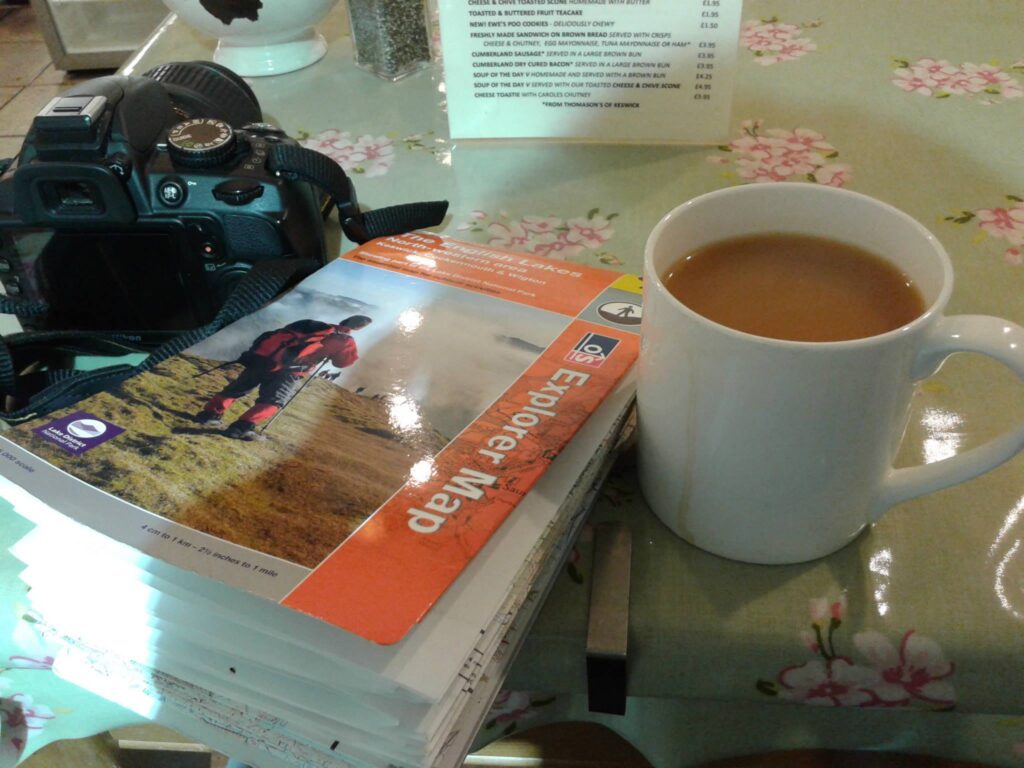
a royal ordnance map that proved to be immensely useful especially when walking alone

After having British comfort food in a pub (toad in a hole was my dinner if I’m not mistaken), I planned my hikes. Basically I would have one and a half day of hiking.

Latrigg

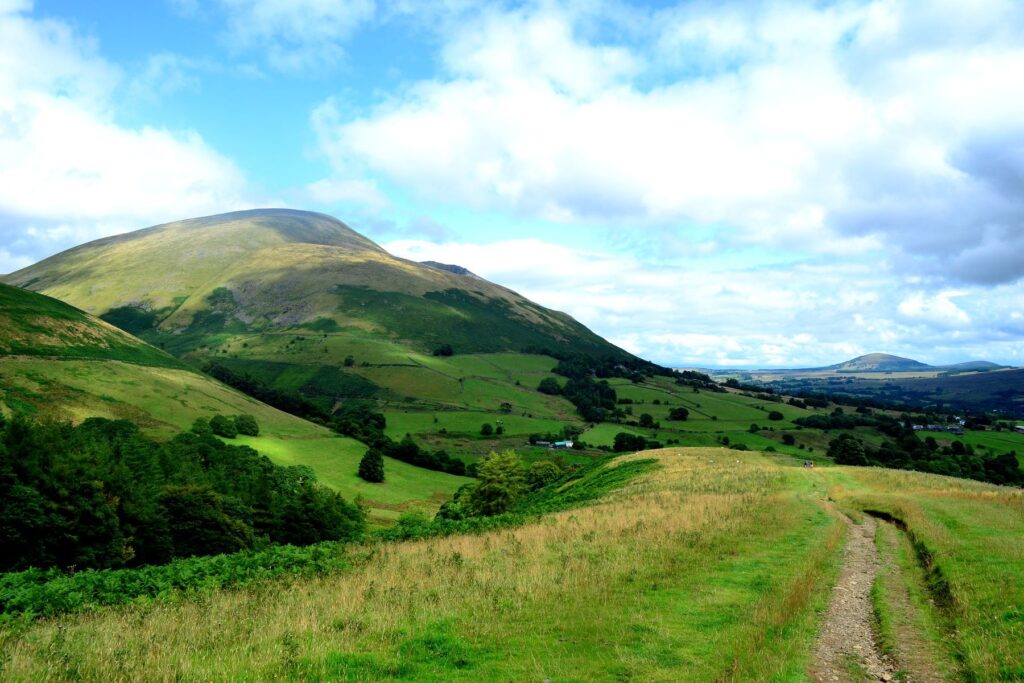
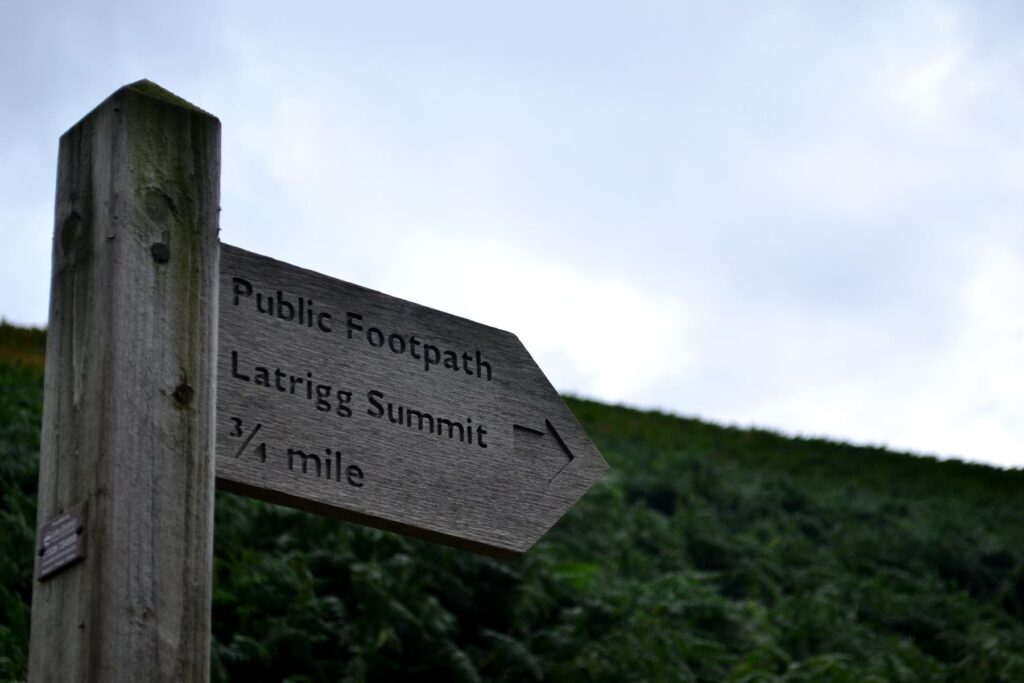
I woke up the next day and embarked on a walk to the Latrigg Summit. It was one of the lowest peaks that were easily reached in the Lake District area but with a beautiful view.
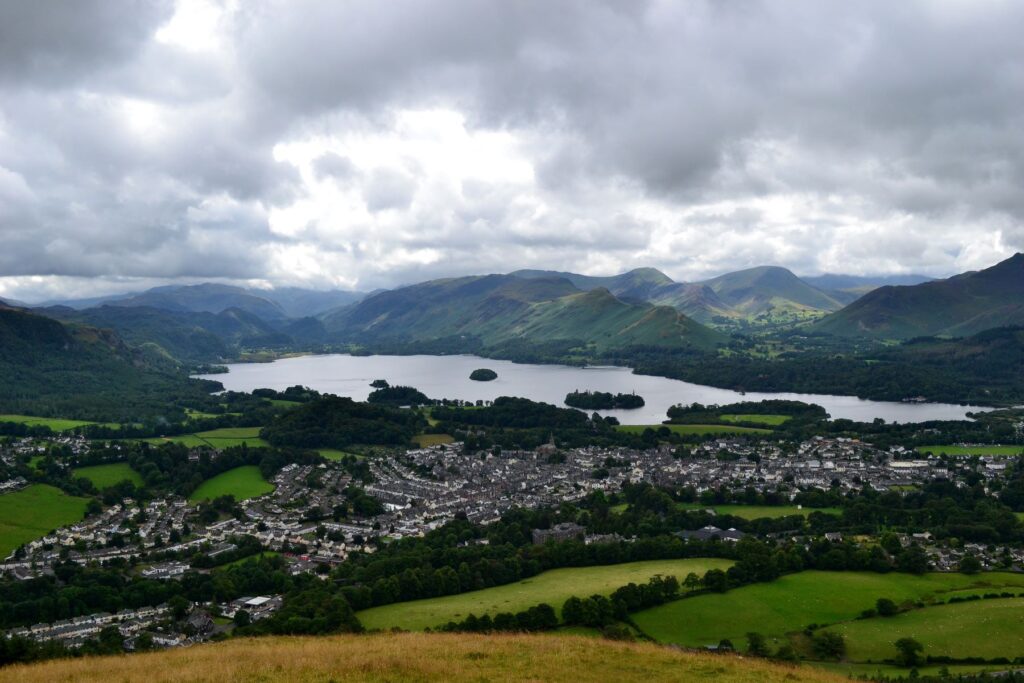
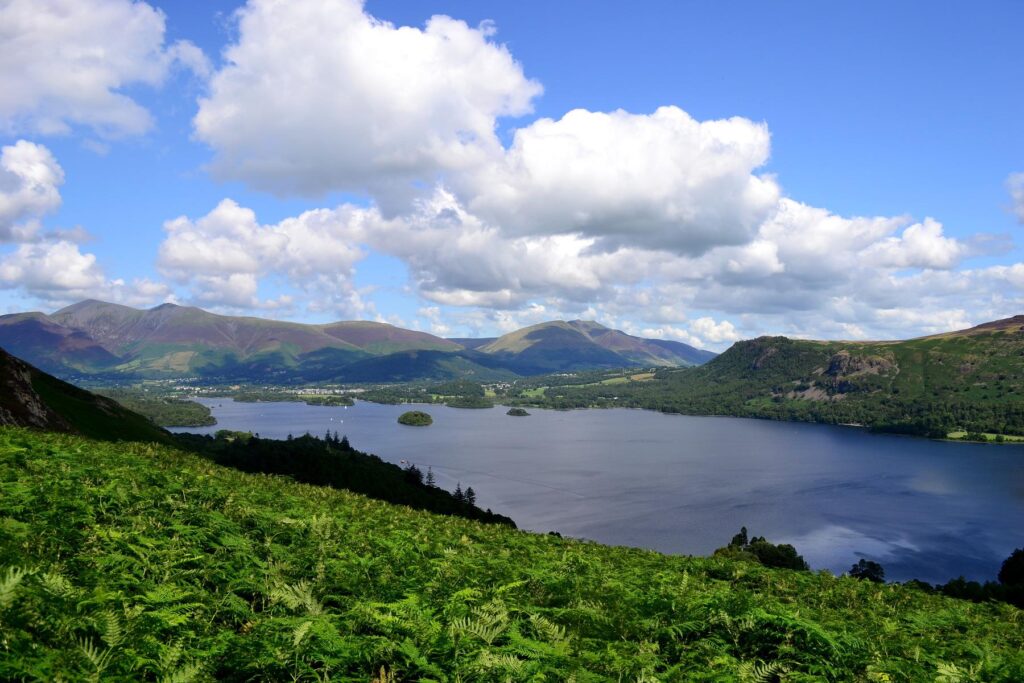
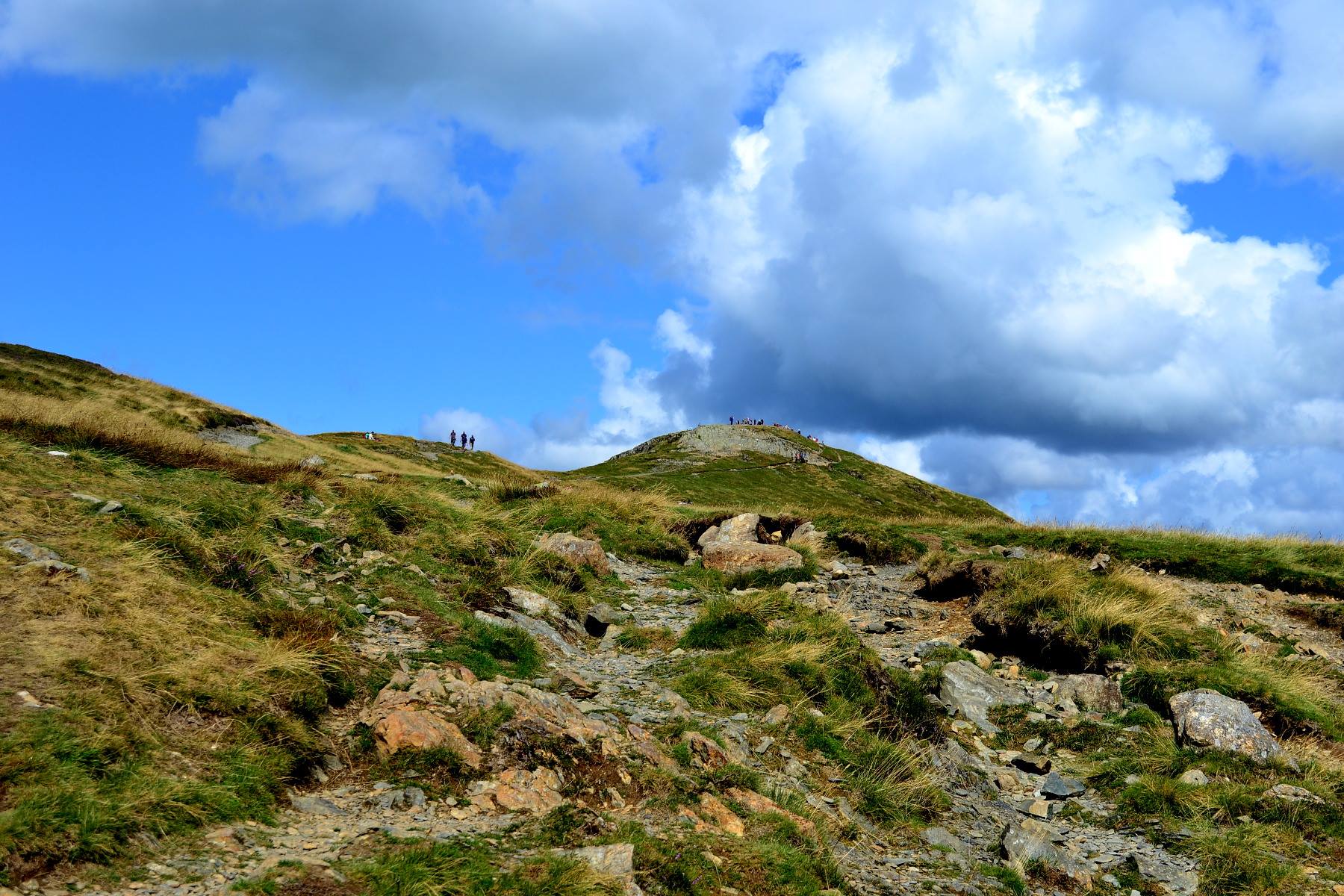
From the Latrigg Summit at 368 metres above sea-level.

From the summit, Derwentwater would emerge into view, along with the whole town of Keswick. Tomorrow, I would walk this loop around Derwentwater, from Keswick and back.
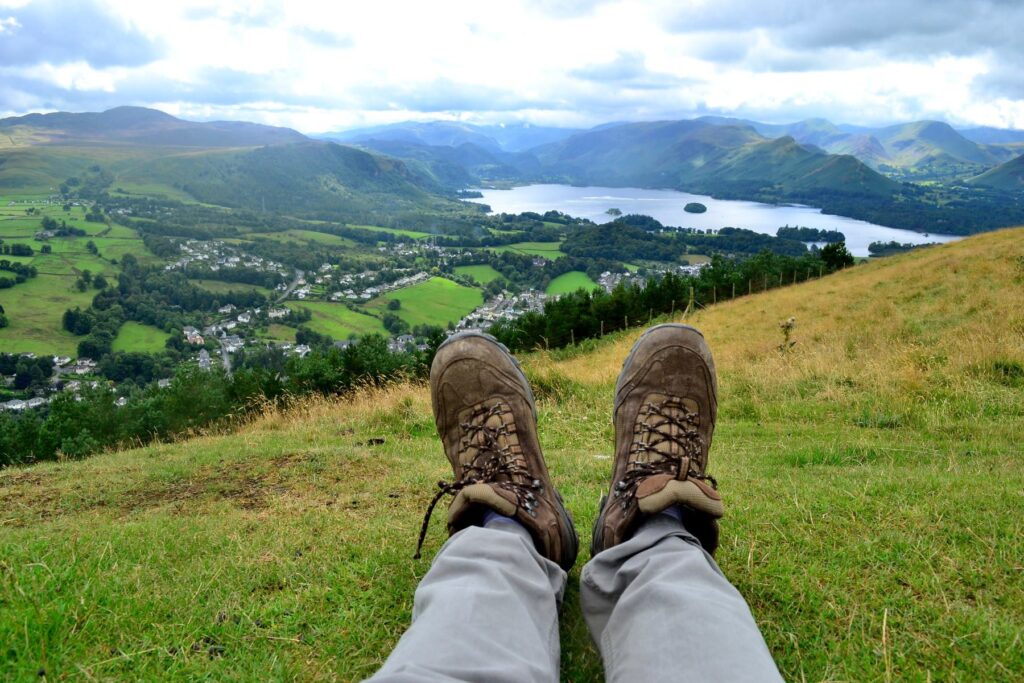
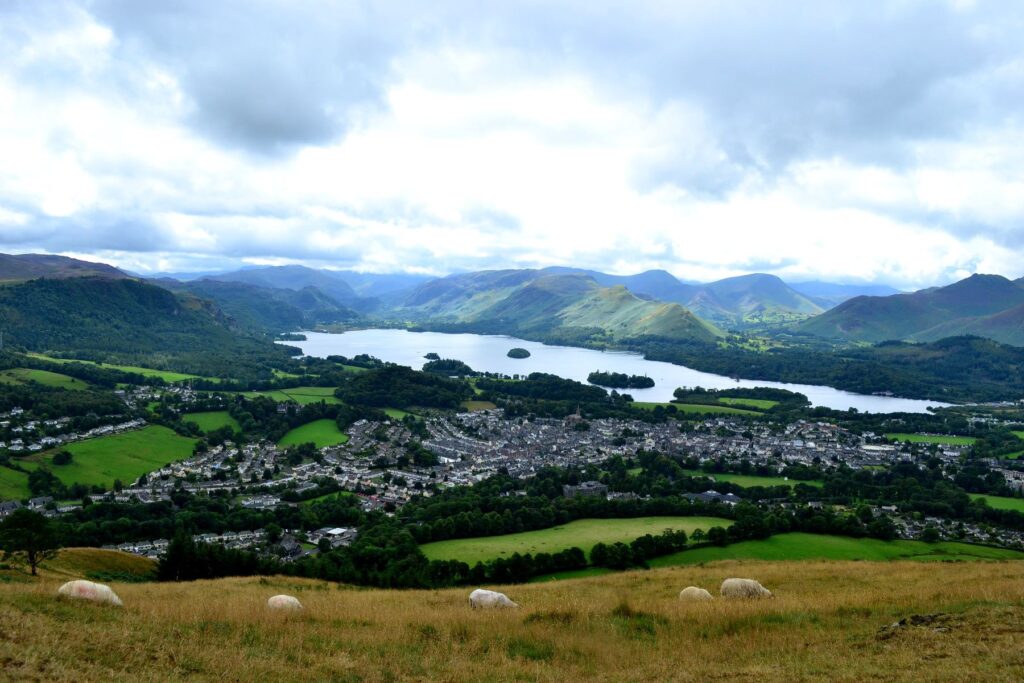
On the way down from Latrigg Summit, I thought to myself that this was an easy walk. My energy was still not fully expended and I still had an afternoon free. So I quickly looked at the possible routes that I could go to on foot. I ended up walking to Castlerigg before heading back to town.

Castlerigg

Although this was not in my original plan, this place was pretty interesting. The highlight was the Castlerigg Stone Circle. It is believed that the stone circle was erected at around the same time as the Stonehenge, making this one of the earliest stone circles in Britain. Hence an important archeological site. Throughout my time in the UK, I had never been to Stonehenge. So I take this as a good opportunity to be able to see the circle up close.
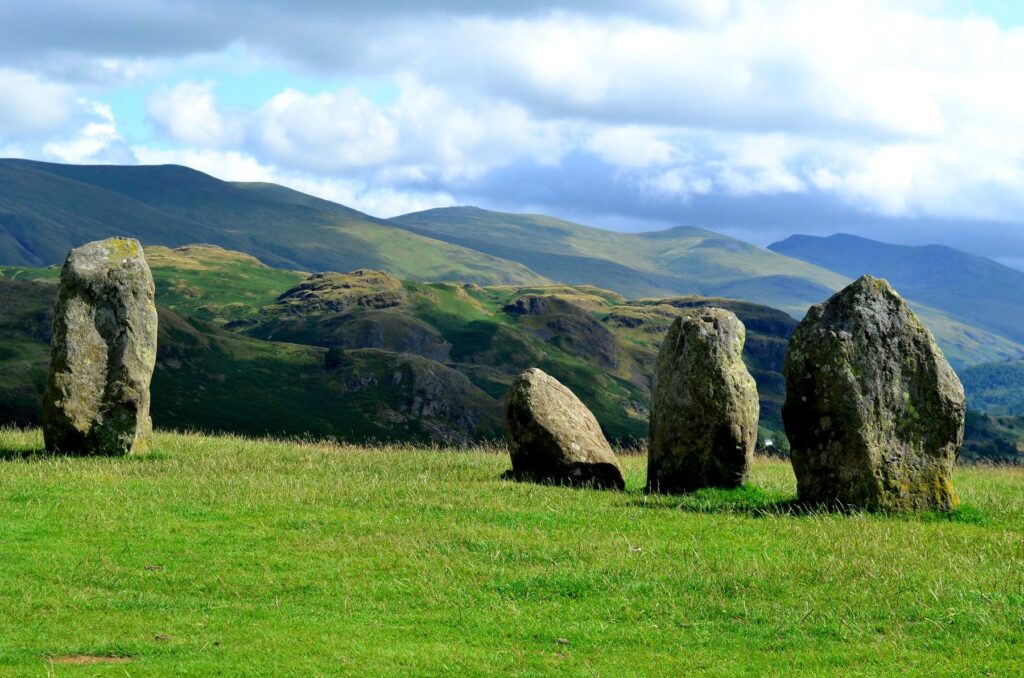
This remains one of my favourite photos. There actually were people around but I walked around (in a circle) to find a spot with a view.

At the hostel, I was pleased with the weather and thought that I could utilise another half-day to walk as much as I could. So I planned a rather ambitious walk around Derwentwater. I would walk from the town of Keswick to Grange, a village on the Southern end of the lake and back to Keswick on the other side of the lake via the Catbells peak. When I was planning the route, I did not think I would attempt to climb the peak as that would have taken too much time. I had to catch a bus to Penrith at one o’clock in the afternoon. Otherwise, I would miss the train connection to London.

Keswick to Grange

The next day, I woke up very early and packed everything. I would leave my luggage at reception, check out and come back to change before heading to the bus station. At seven, I was already on my way. The first part of the route was easy enough to follow, just walk along the lakeside. Towards the end though, the map became very useful.
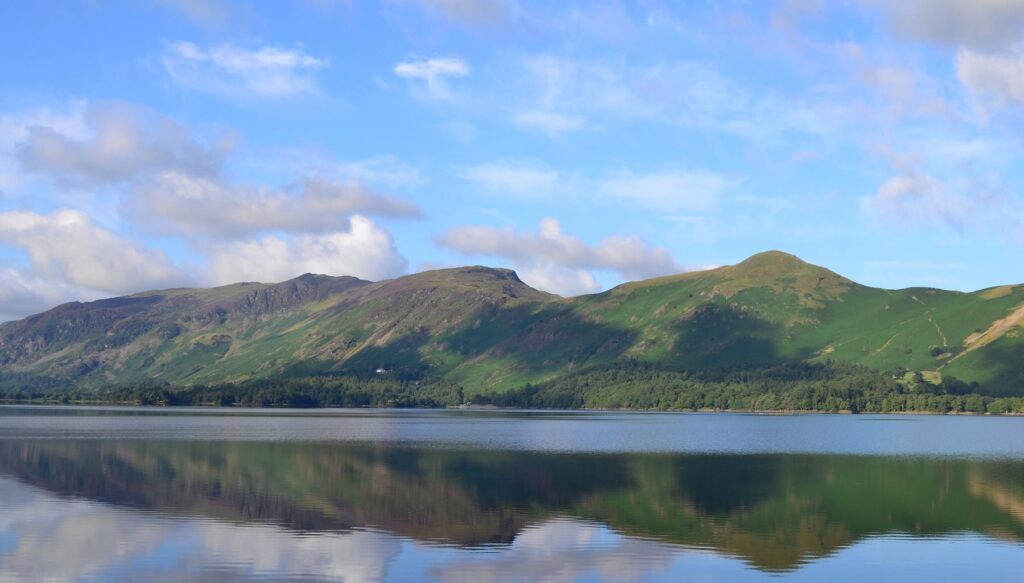
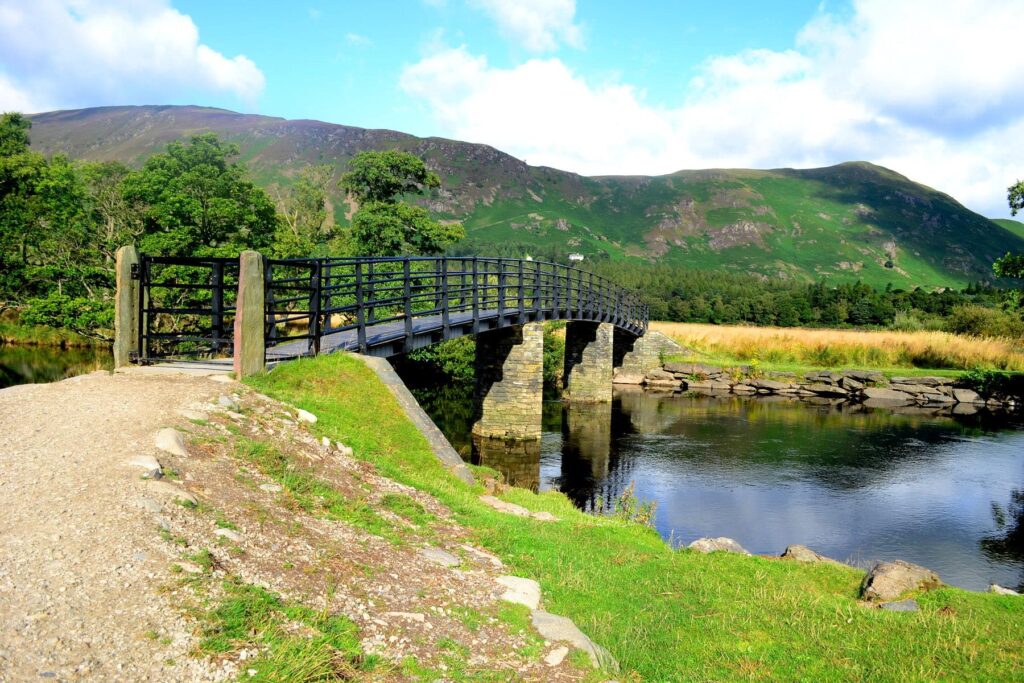
I would be walking back via the other side of the lake later on.
Towards the end of the lake.

When I reached the end of the lake, I stopped for tea at a cafe in Grange village. I was on a tight schedule, so I walked on after a brief break.
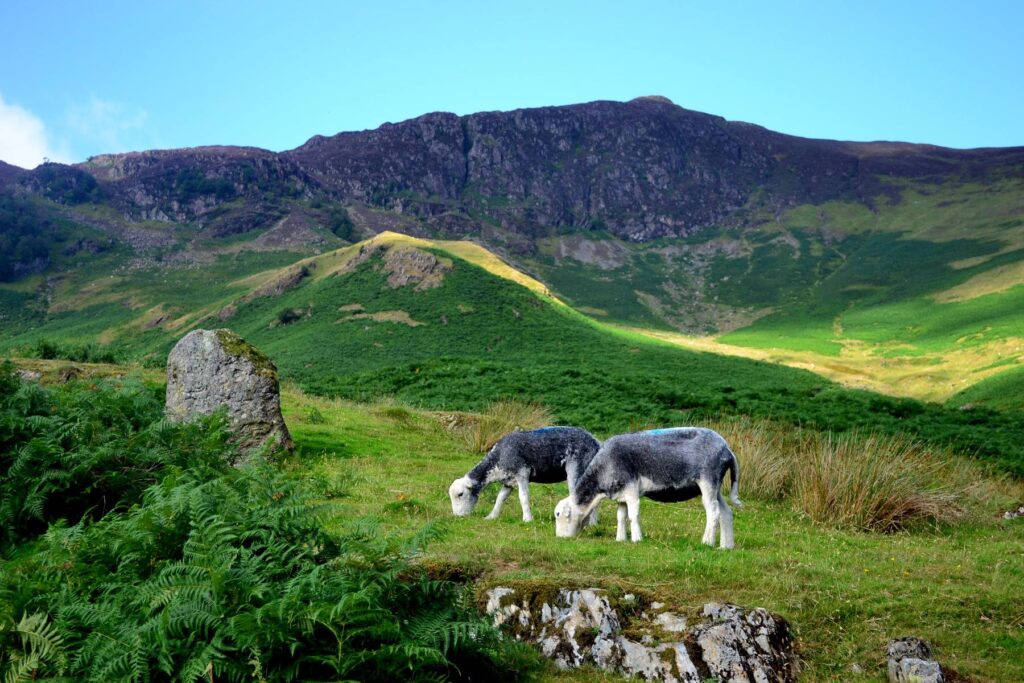
Here comes an even more ambitious attempt when I was walking back on the other side of the lake. I saw people coming down the Catbells peak. Many were much older than me and I could see the peak from below. It could not have been far away. Just a few steep climb and I should reach the peak, the view from the top should be really nice, I thought to myself. After about 15 minutes of steep climbing, I felt out of breath. I asked a few people who were coming down whether I was getting any closer to the peak. They all said “you are nearly there”. I rushed to climb up and when I reached some sort of plateau, I thought that was the summit. But it was not. It appeared that there were many false summits before the actual one. I was really out of breath as I kept looking at my watch. I had only minutes to spare. Otherwise I would miss the train to London and that was too much a risk. My heart was beating really fast. In a split second, I feared for my health. With much regret, I had to say goodbye to Catbells summit and walked back down. I walked in a hurry throughout the rest of the walk. I got back to the hostel, changed, and got to the bus station in time.
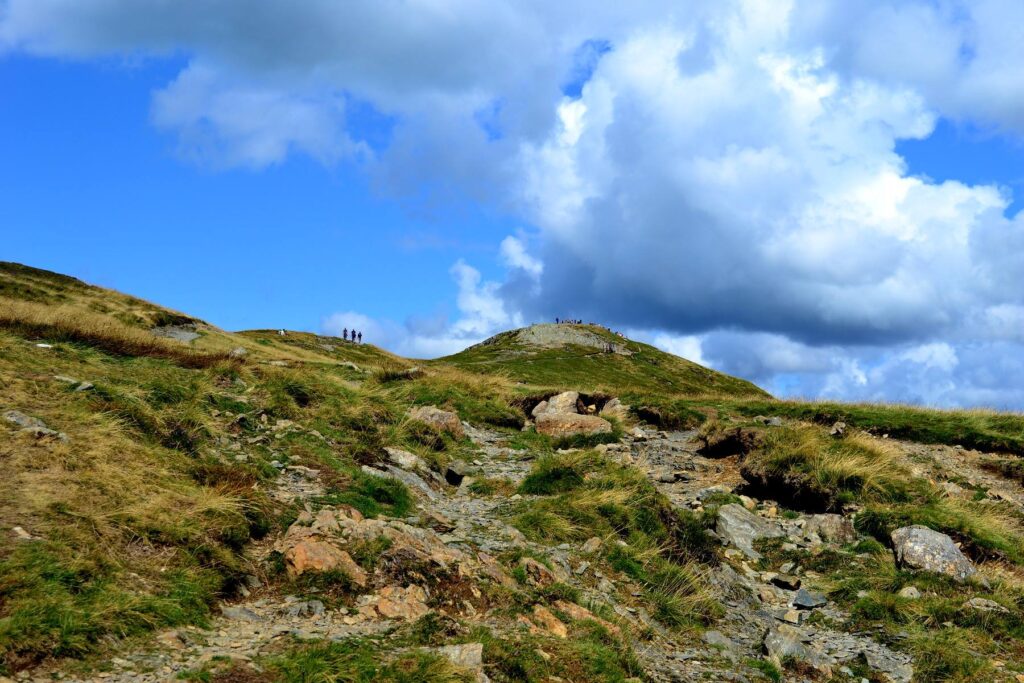
I had passed many summit-looking hills before I took this photo. I did not know whether that peak I see further afield was the actual summit. But I had no more time. I left Catbells after taking this regretful photo. Hope one day, I could go back with more time to spare.
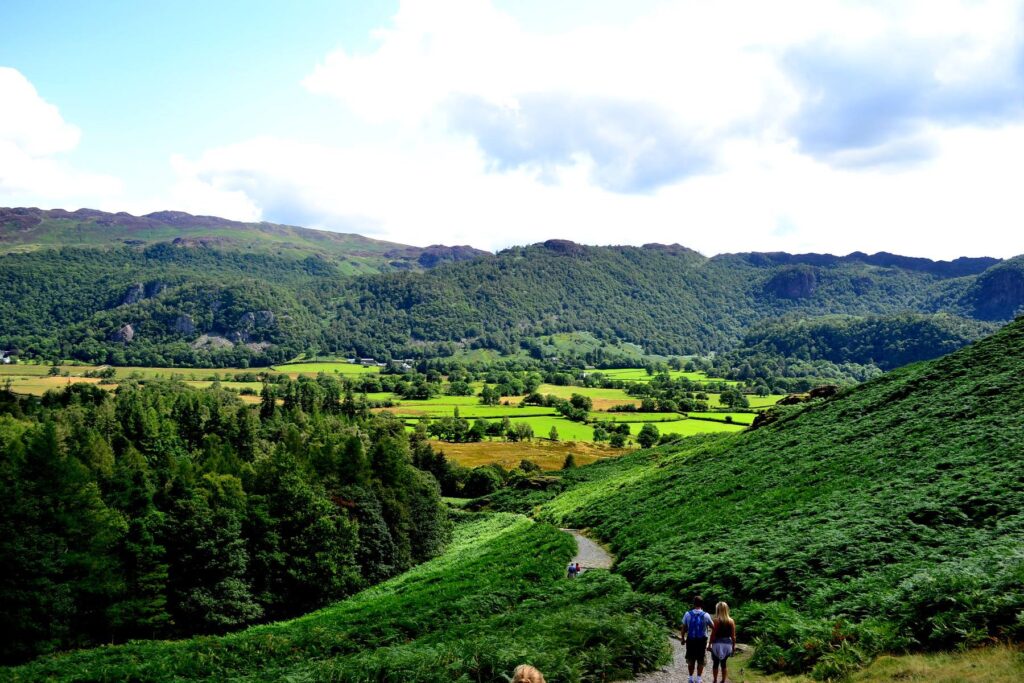
Derwentwater from Catbells shoulder.
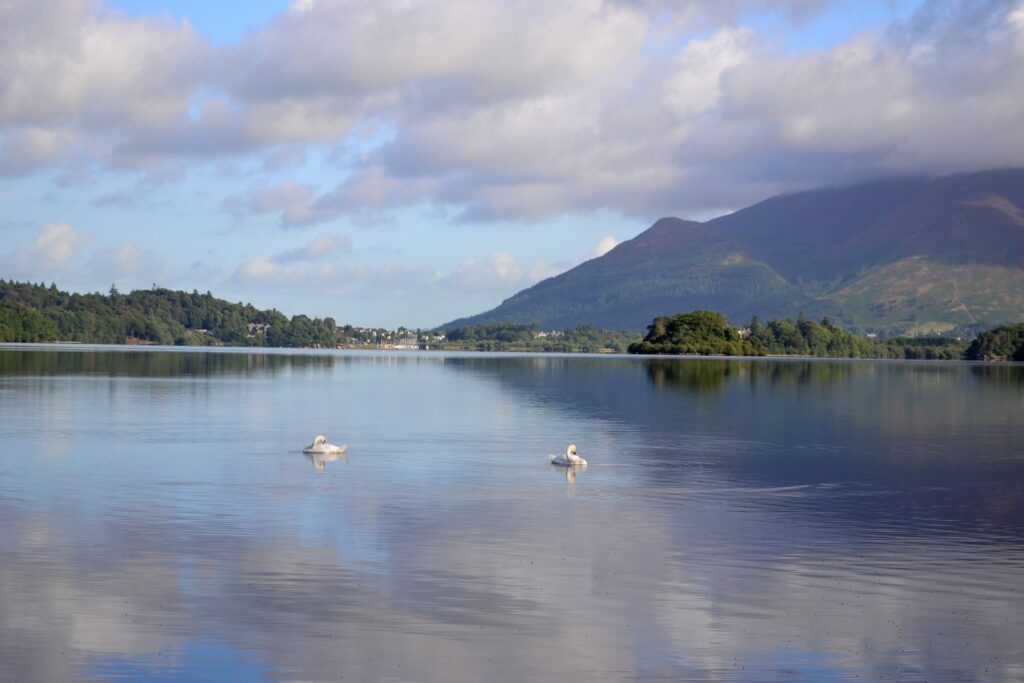
Another photo of Derwentwater.

It taught me a big lesson – do not overestimate yourself. There are times when things may not go our ways. And that’s just the way it is. Be realistic. If the main goal (i.e. walk the walk and not miss the train to London) was reached, then that was good enough. In fact, the journey, in many circumstances, is more important than the destination.

The trip became one of my most memorable trips of my life. In that half a day when I walked around the lake with an attempt at climbing Catbells peak, I walked a total of 14 miles or 22.4 kilometres.

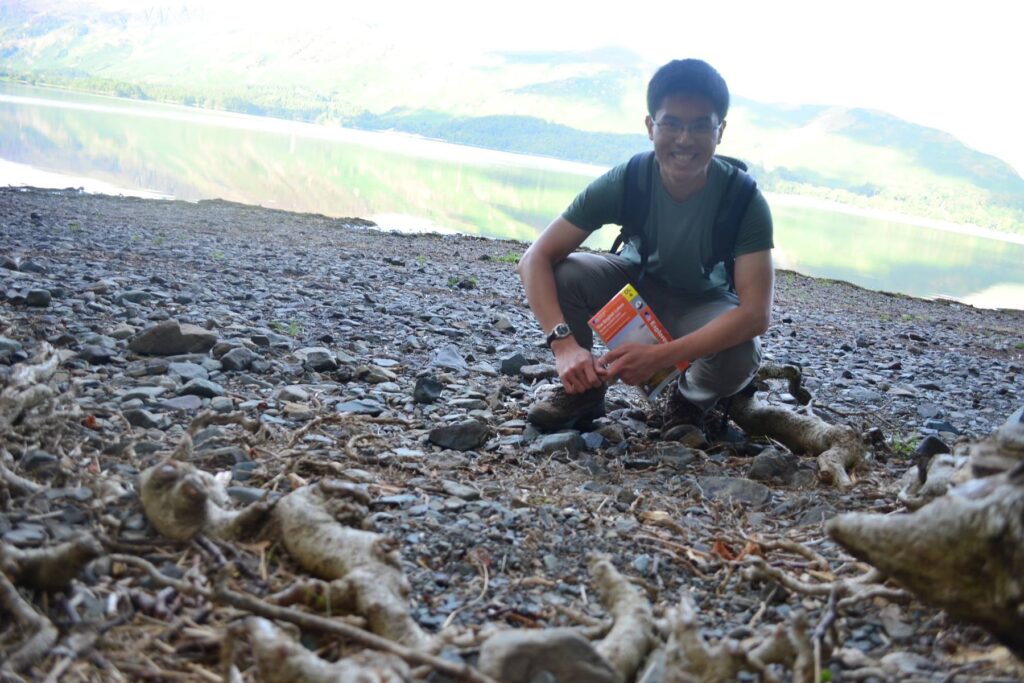
I did attempt to take a selfie with my Nikon camera, and this photo will tell you why I should work on my skill a bit more.
Top of Java

A few days back, Facebook reminded me of one of the most rewarding trips I have ever taken. It’s been two years since I and my two good friends climbed the top of Java.

It was a trip that had been planned many months in advance but to a different destination. Originally, our plan was to climb Mount Rinjani, an active volcano, in Lombok, known for its beautiful view from the summit overlooking the crater and Anak Rinjani (the small Rinjani, emerged from of an eruption many years earlier). The major earthquake in Lombok in 2018 changed that. We were 2-3 weeks away from travel when earthquake occurred. There was a landslide that affected the path to the top of Rinjani so we had to change our plans.

While we did deliberate whether to ditch the plan to hike altogether, we felt that since we had done some preparations (including doing multiple sets of squat a day), we would go ahead with hiking but to a different mountain of similar character. Mount Semeru, another active volcano, came to mind. At about 3,600 metres above sea level, Semeru is the highest mountain in Java. We would get the same experience of climbing a volcano as if we would have if we had a chance to climb Rinjani especially the last non-vegetation section that I will elaborate in a bit.

We proceeded with changing our tickets. Luckily, in the end, we got all our money back, partly in flight credits. For our new destination, we stopped over at Kuala Lumpur before taking another flight to Surabaya. We paid a private tour company for the guide, porters, meals and accommodation while trekking. This basically meant everything apart from accommodation in Surabaya and flights to and from Indonesia. Having spent the first night in Surabaya, the next day we went to Malang. We met our guide who then transported us and our belongings on a jeep. We were on the jeep for about one hour. When it stopped, we were on the highlands. The weather turned chilly. It was mid afternoon and we went a small clinic for the quickest of the brief health check-up. Having obtained the so-called health certificate, we set off to the last village with mobile phone signal before the real trek began.

Upon arriving at the village, we were booked in a small guesthouse behind a shop. It reminded me of my boy scout outing and my military service. It had running water and separate beds but not what we can call comfortable. But I should not complain since our guide and porters were sleeping outside in their sleeping bags under the roof without any mattresses. Before we went to bed, the lady who worked at the shop cooked us some dinner. In retrospect, it was a restless night. It was pretty cold, probably around 8-9 degrees in the middle of the night and the blanket was very thin and almost did not help at all.

When morning arrived, we washed, had breakfast and set off at around 8 o’clock. I sent some messages home basically to say that I would not be contactable for another 2 days.

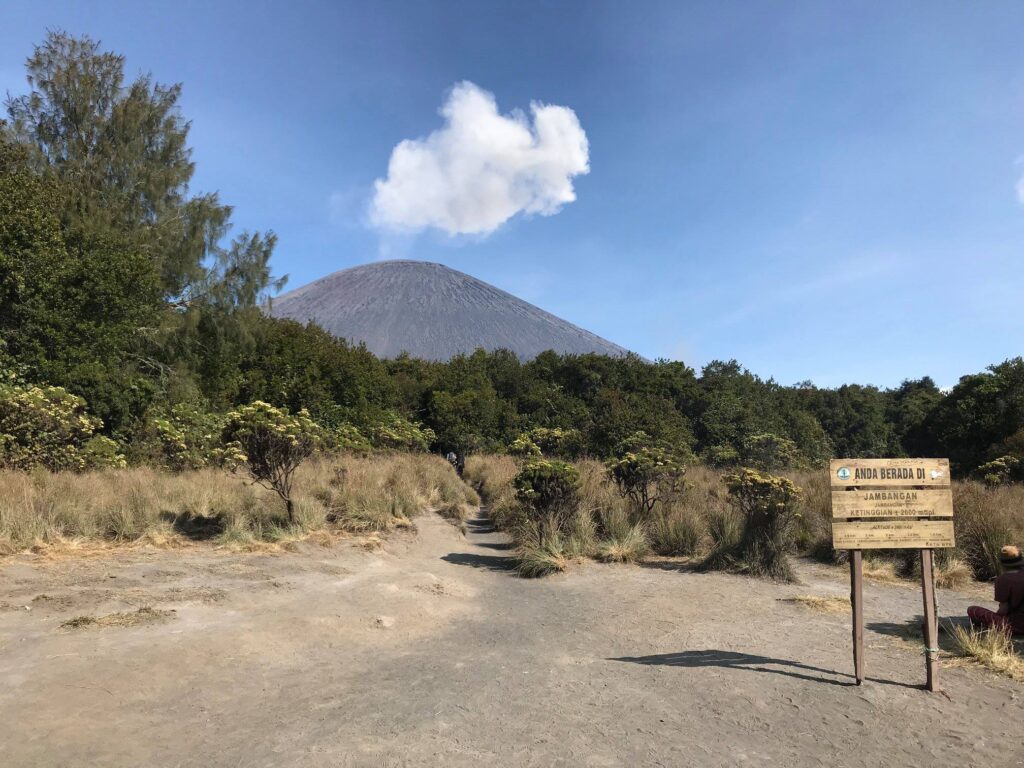
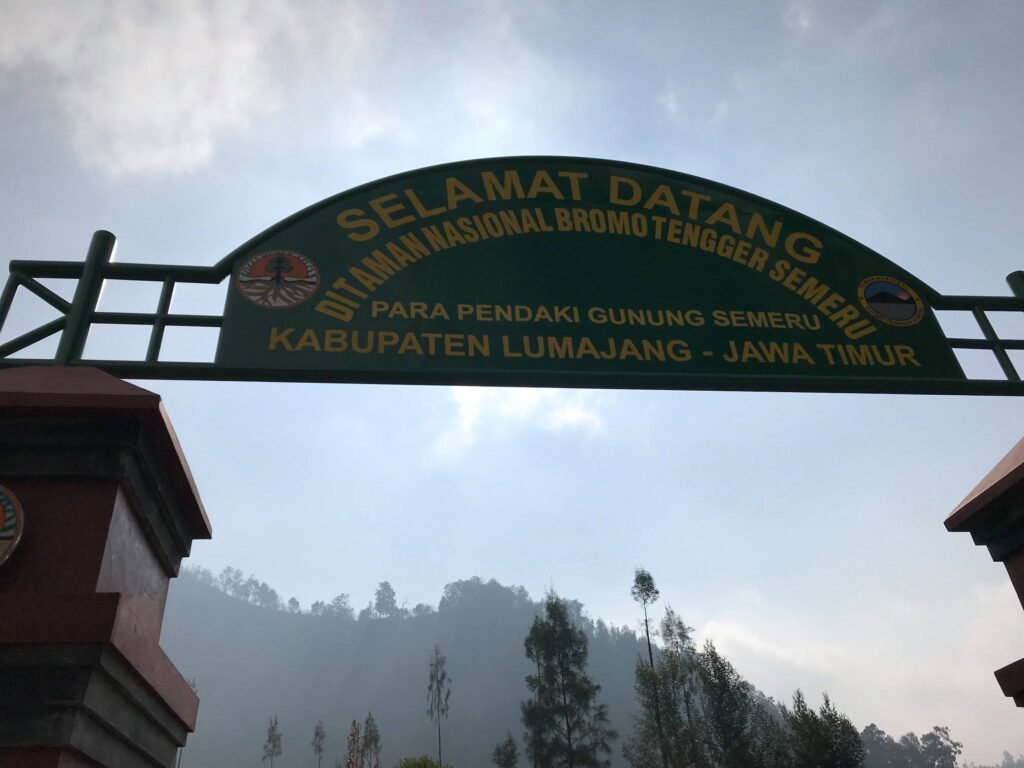
Passing this gate and all mobile phone signal would be gone. Our trek began here.

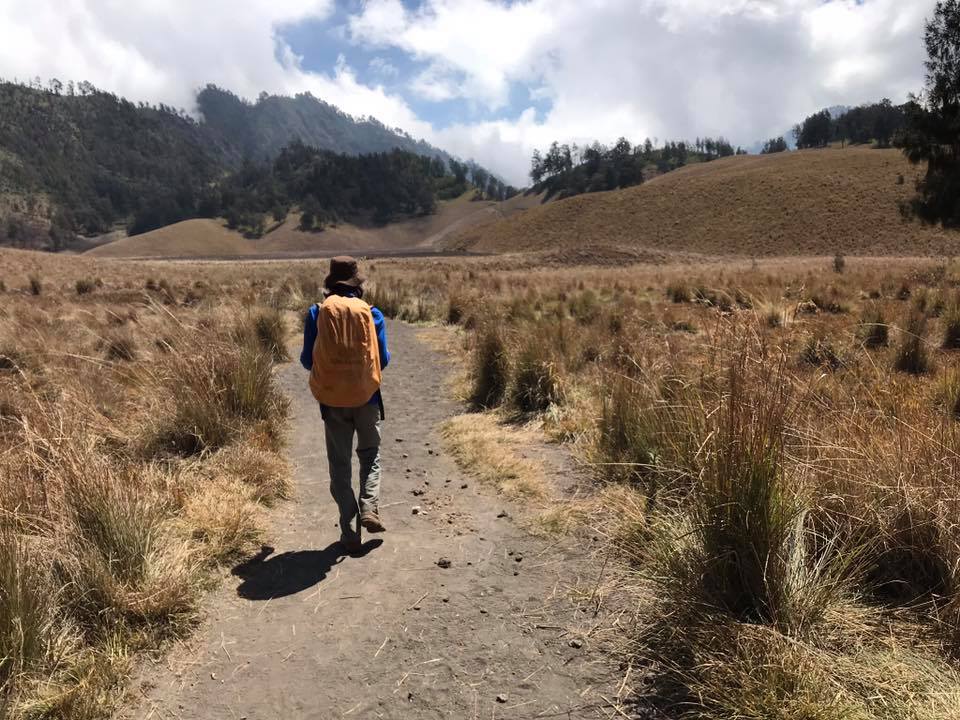
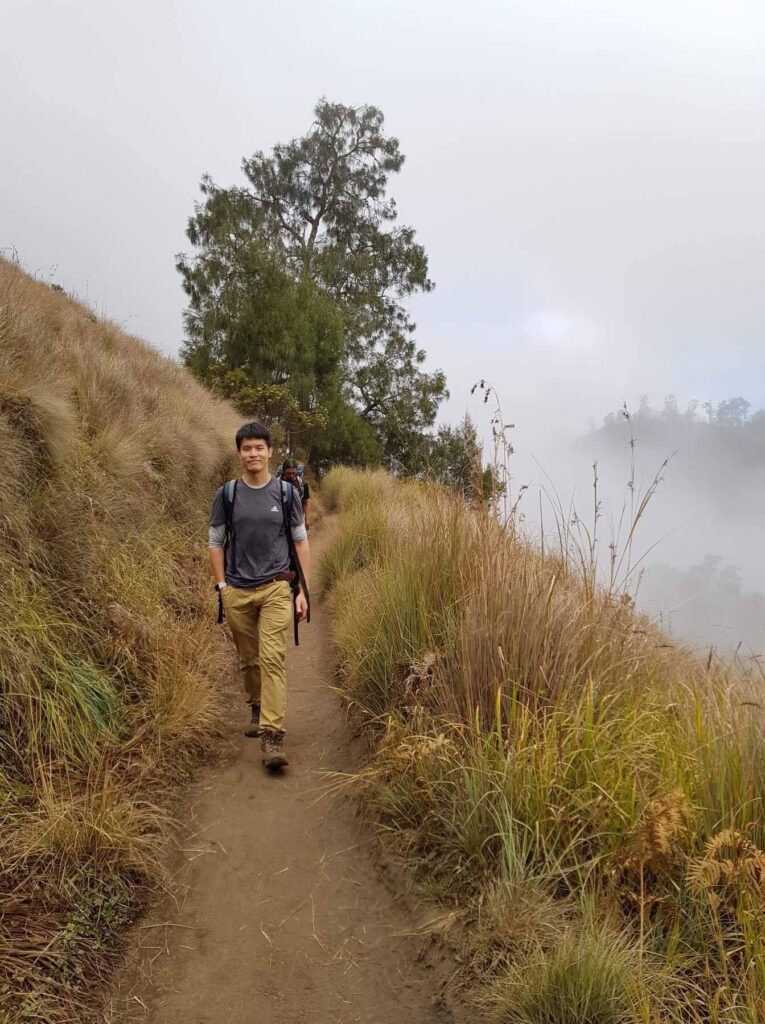
We had a nice flat terrain for about 45 minutes to 1 hour. At the first pitstop, there were people selling instant noodles, coffee and cigarettes. After that first pitstop, we would just walk and walk. Our guide was not a quick pace hiker but he rarely stopped. Our porters already went beyond us. Apparently they would need to go before us to set things up when we reached the resting points.

The picture was taken just after we passed the gate. The last moment of flat terrain.
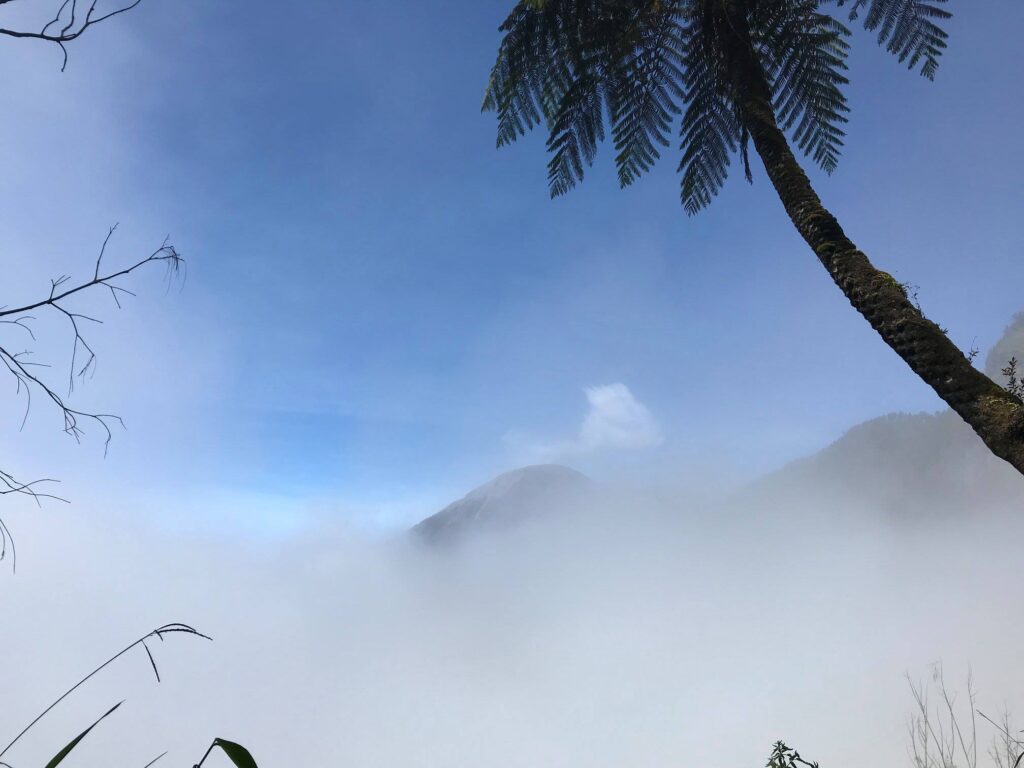
From afar, the summit of this volcano was where we were heading.

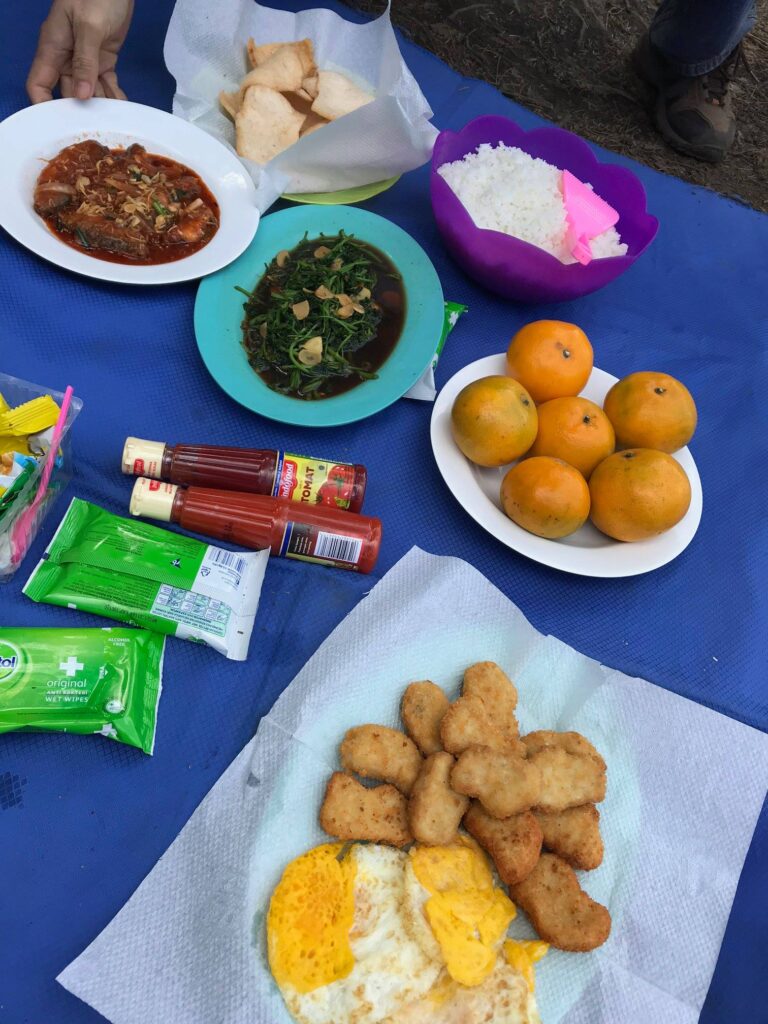
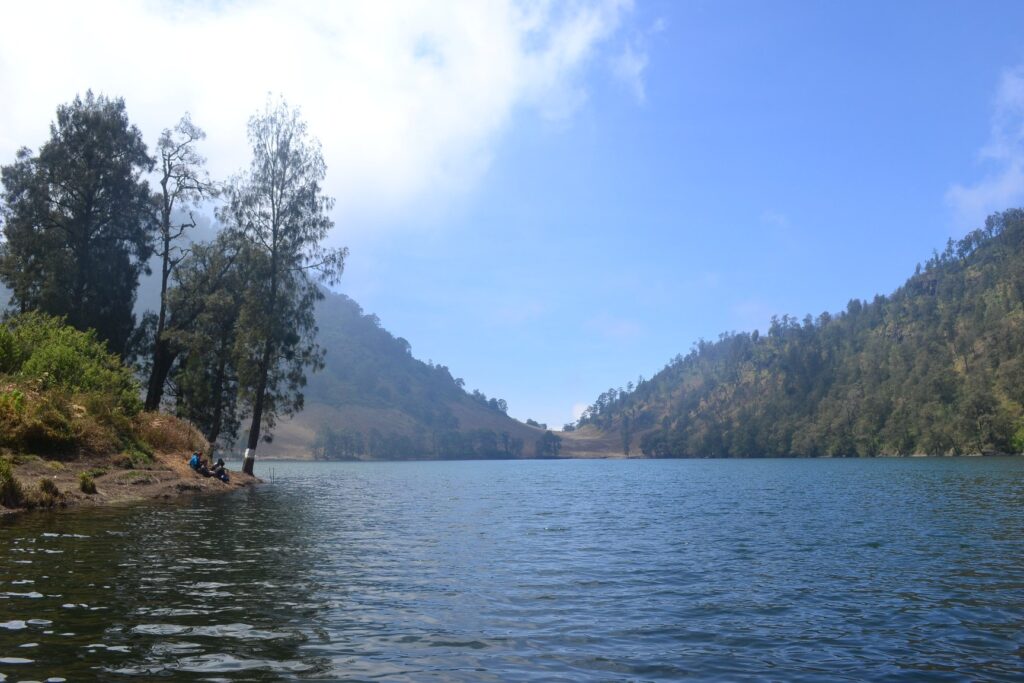
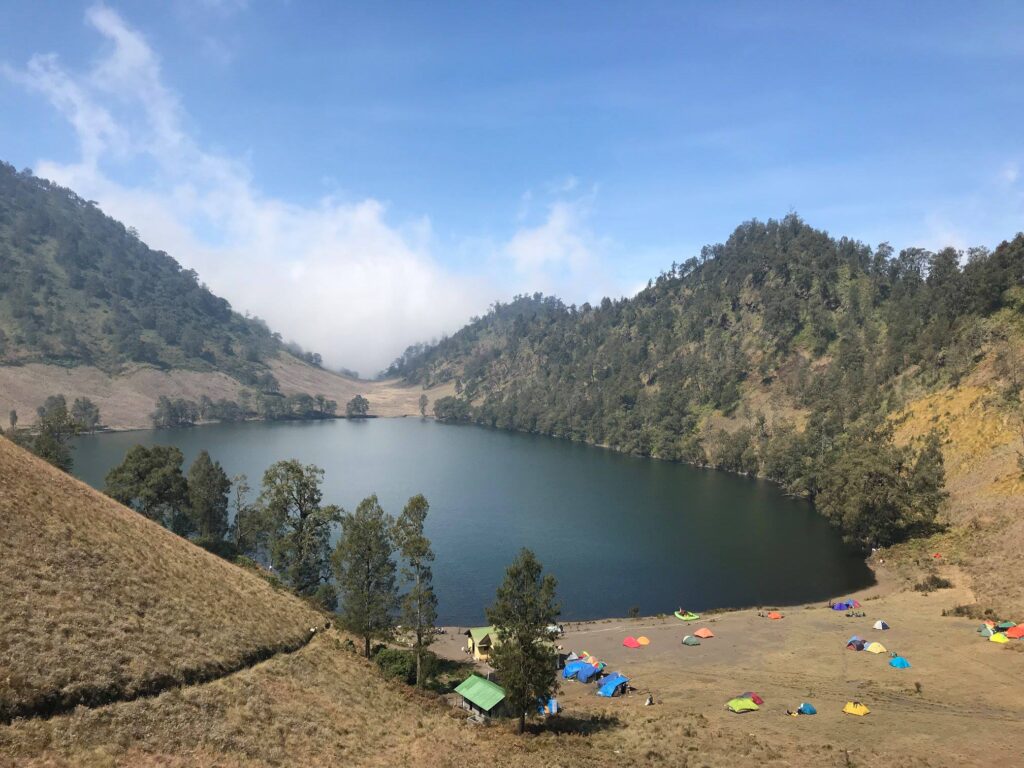
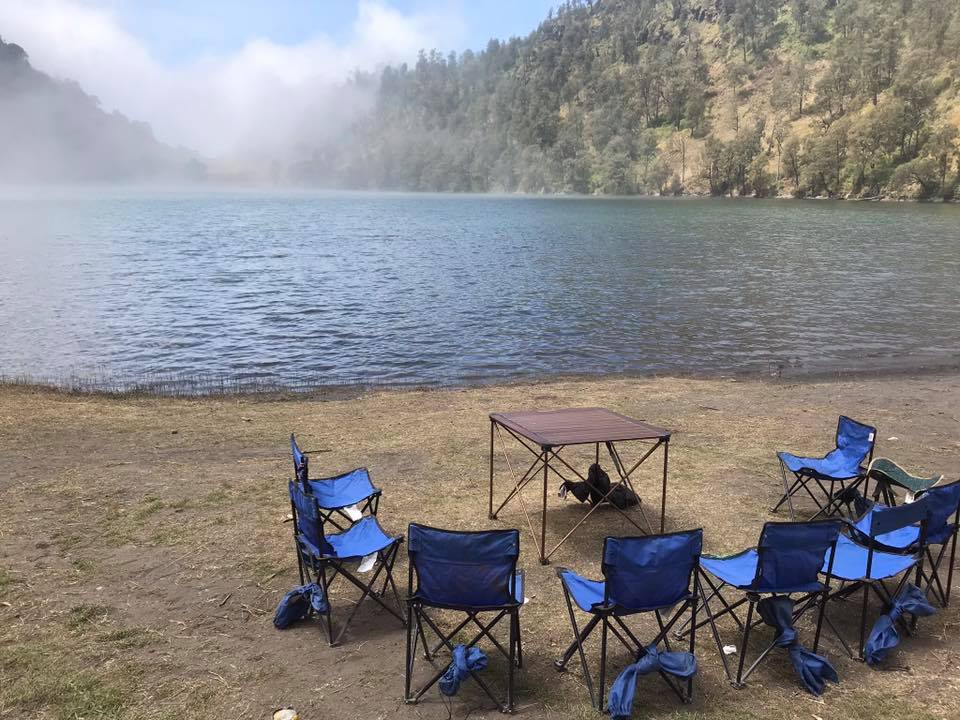
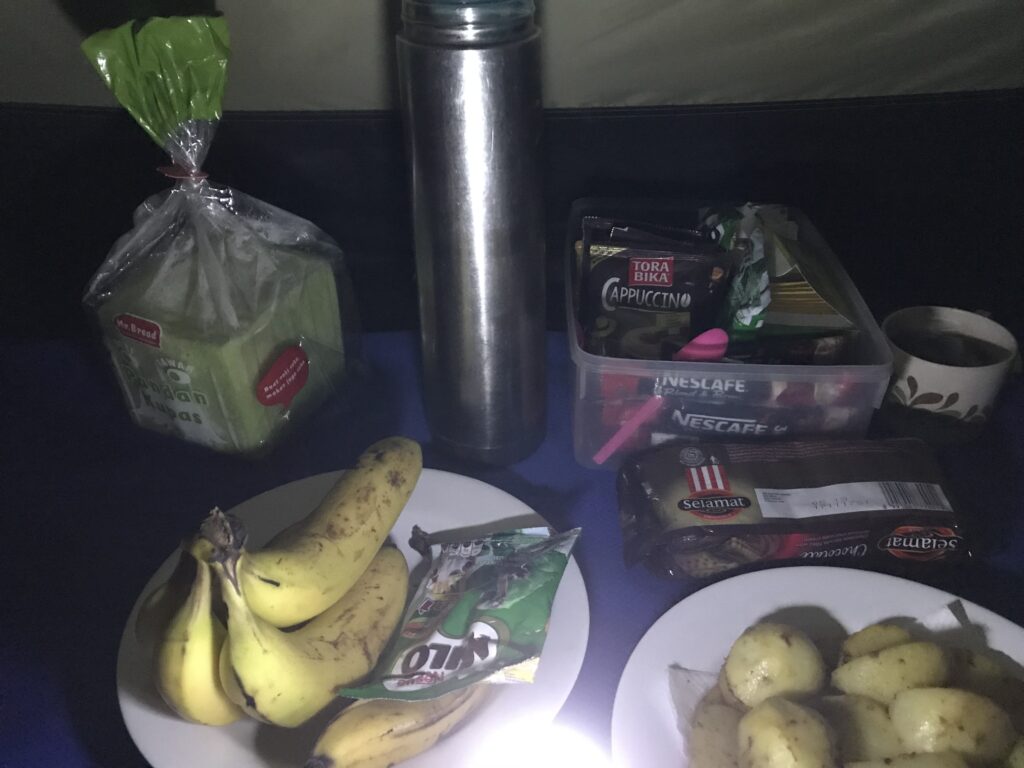
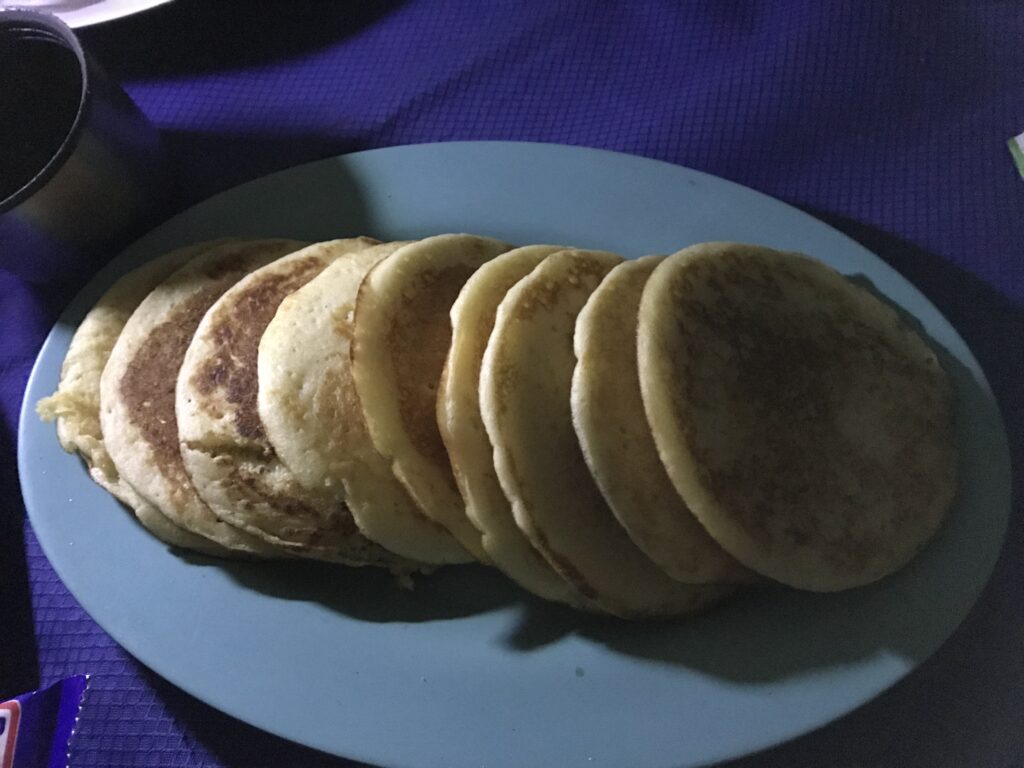
We stopped for lunch at Ranu Kumbolo or Lake Kumbolo. It is quite a picturesque place to rest. At this point, I realised that each company that does the trekking packages had different characters. Whenever we reached the rest stops, we would always see chairs being laid out for a group of trekkers. They would have their own toilet and shower tents. We did not have those but we had a separate dining tent, basically an empty tent with a battery-powered lamp where we would eat together. We sat on the floor with a mat but our specialty was food. I learned later that our guide had his own little cafe in Malang and he liked cooking. So our food had never failed us. Ranu Kumbolo was the last place before the campsite and the volcano that had fresh water. So our porters cooked chicken here so they did not have to carry the raw meat into the trek which would risk it going bad. They filled up our water supplies. Then we set off again.

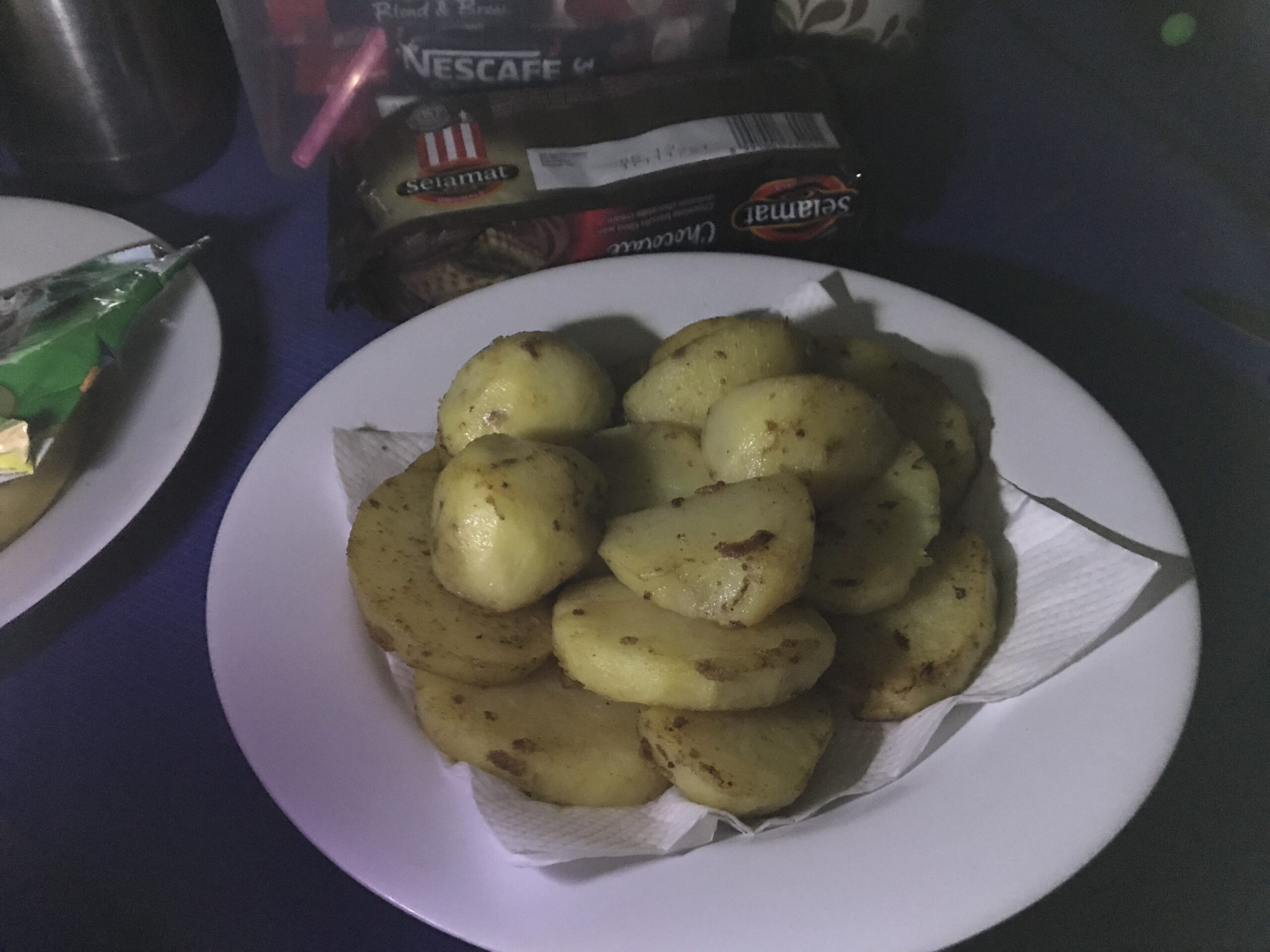
Our food at Ranu Kumbolo
Our guide
Ranu Kumbolo, the last stop with freshwater.
Ranu Kumbolo
Unfortunately, these were not for us…

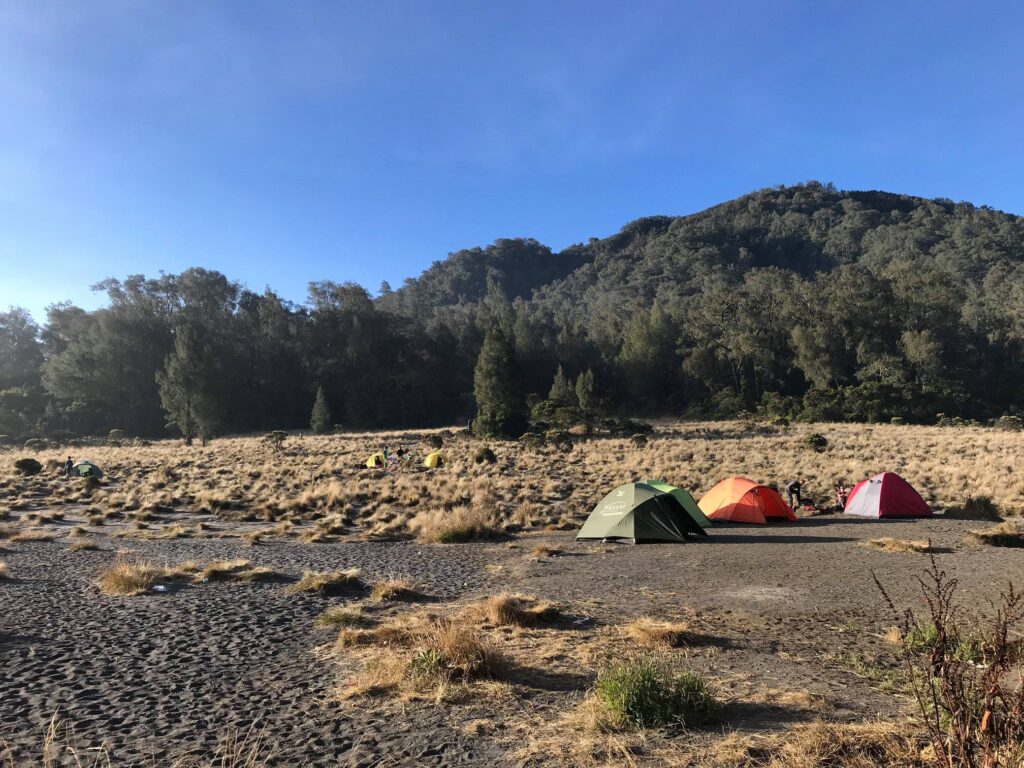
After around 7 hours of continuous hike, we arrived at the campsite in good time. It was around 4 o’clock in the afternoon. Our porters rushed to set up tents and cooked dinner. From here, we could see and hear volcanic eruptions of the very volcano we were about to climb. After dinner, we went to sleep at 6.30 pm. We would have to wake up at midnight to begin our climb at 1 o’clock in the morning in order to reach the summit before sunrise.

This was the path that led to our campsite. Yet from this point, it was still a good two-hour trek.
The Kalimati Base Camp – Since there was no public toilet, you may want to watch your steps at night…
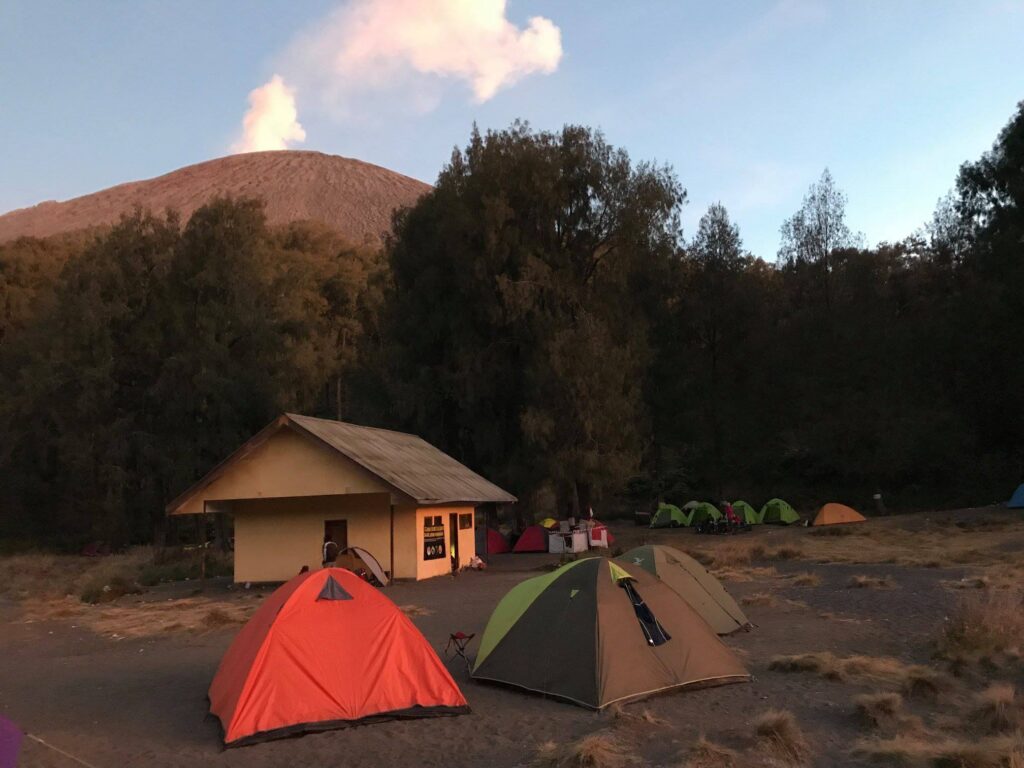
Our three tents. One for dining. From here, we were able to see and hear volcanic activities of Mt.Semeru very clearly. The four green tents you see near the tree line belong to the more privileged trekkers with chairs. Also, do not get distracted by the hut. It had nothing there. It was shared by porters to prepare food.
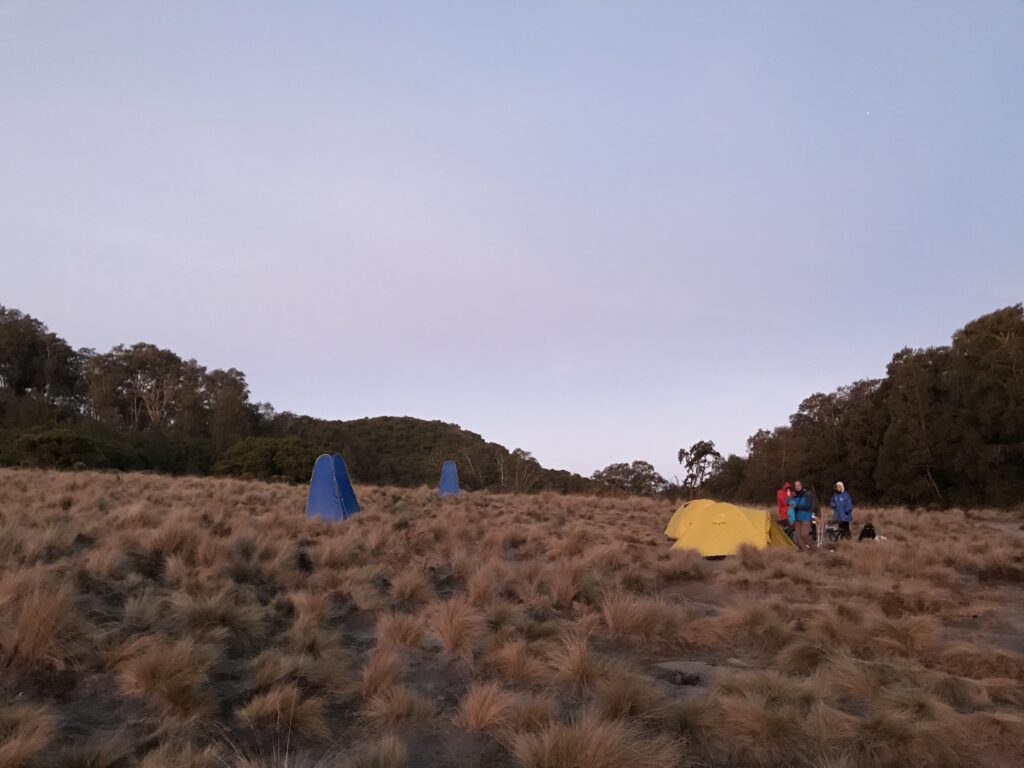
Some trekkers had their own toilet and shower tents.

Alas, I did not get any sleep that night. I laid awake the whole time. It was the feeling of being so close to the volcano yet I did not know whether I would complete the trek. I was worried about accidents that may happen. There were stories, although quite rare, of people who died climbing. It was my first time to climb above the cloud so I did not know how the high altitude would affect me. In any case, at midnight, we got up and ate our ‘breakfast’.

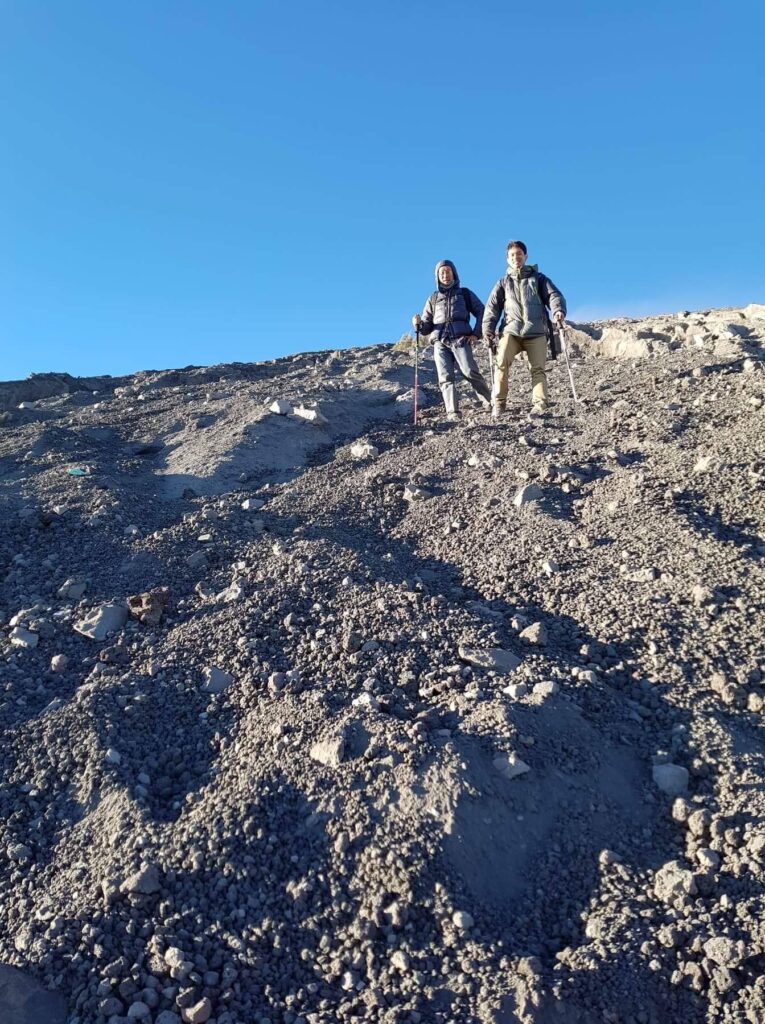
The trek from the campsite up to the summit is arguably the toughest. Compared to Rinjani, the trek we did before the campsite was easier than Rinjani’s but the trek up the cone of the volcano was similar according to those who have been to both places. We began our trek at one in the morning, right on time. Thirty minute into it, our guide announced that we had reached ‘last vegetation’. In general, this meant there would be no trees and we were reaching the cone of the volcano. In terms of trekking experience, it meant hell. Every step we climb, we would fall two steps back. The climb would be almost impossible without hiking sticks. The air became thinner and I might have suffered a bit from altitude sickness. I asked to rest a few times and my rest became more frequent closer to the top. Yet we did not stop for long. We continued to climb and only when we reached the summit that we realised that we were the first group up!

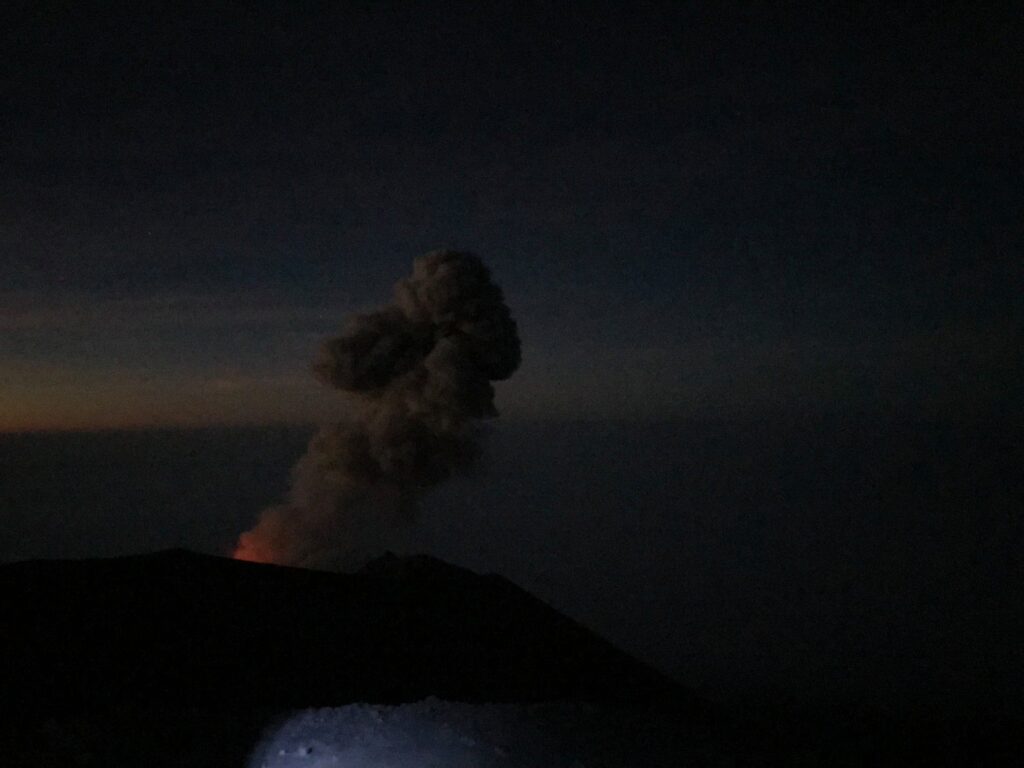
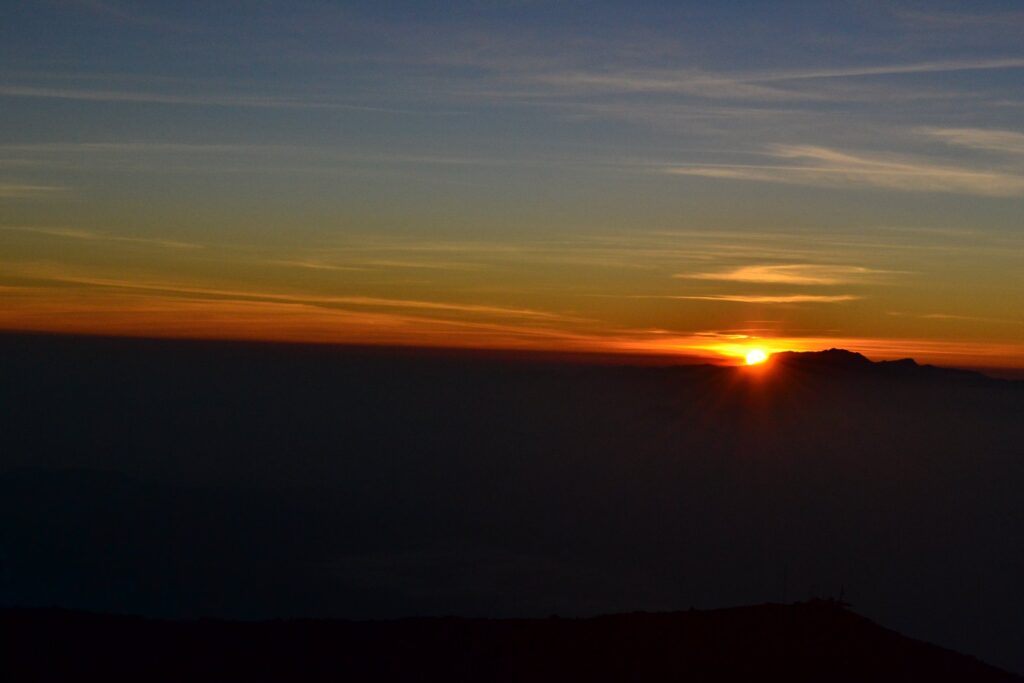
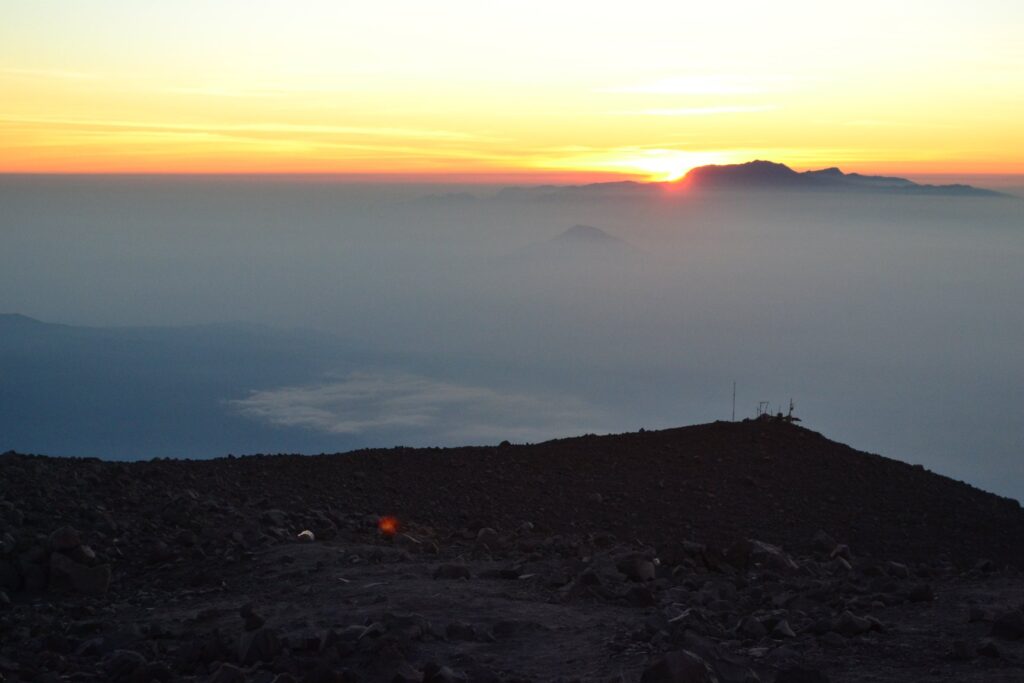
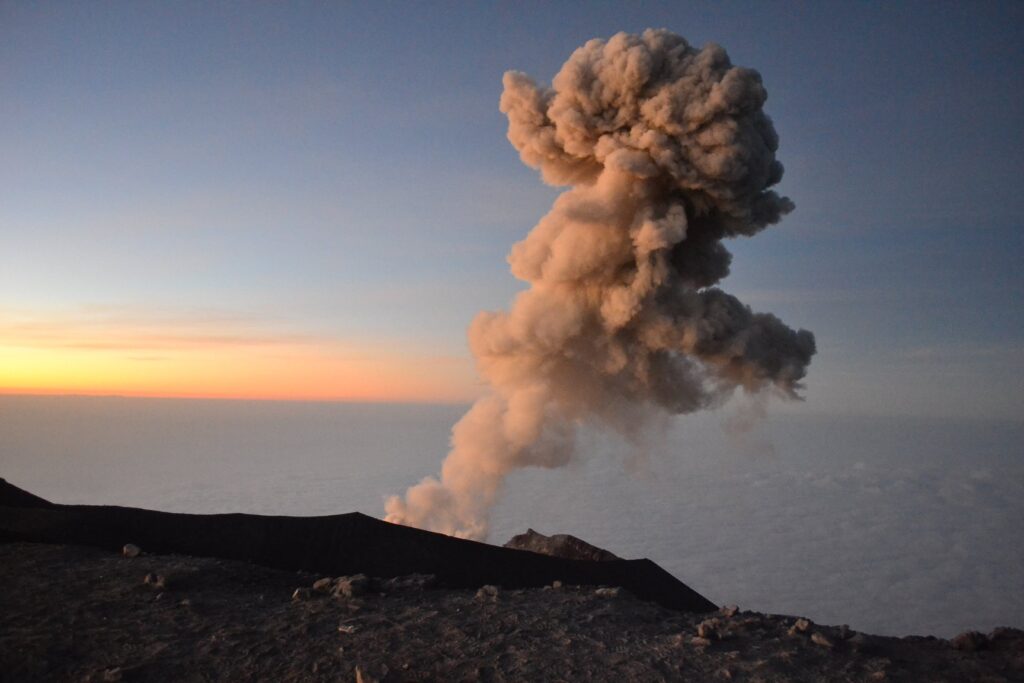
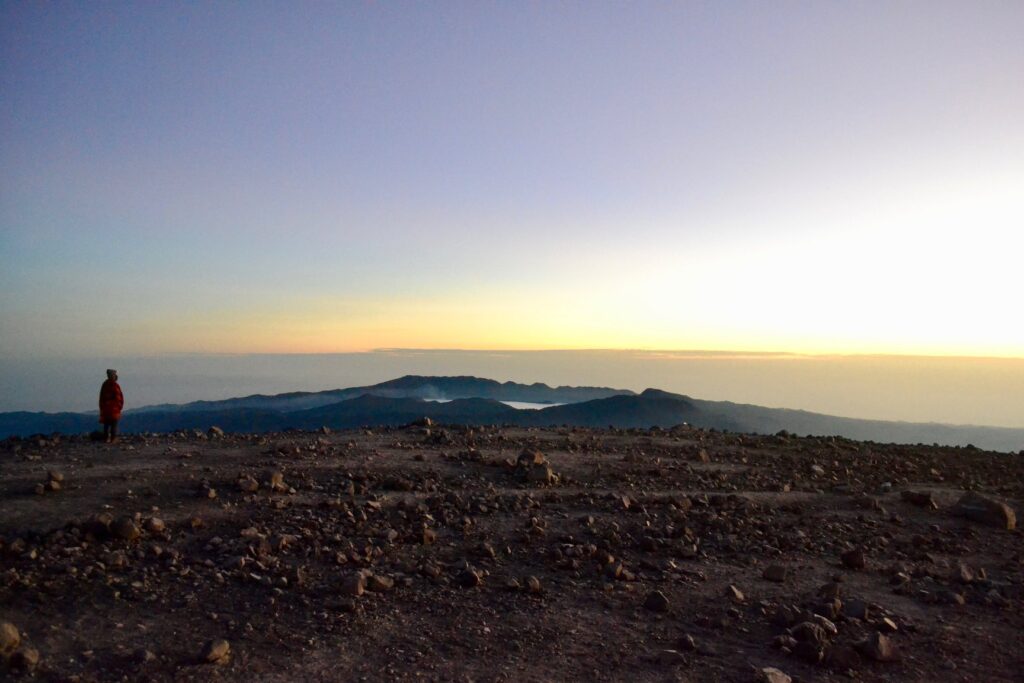
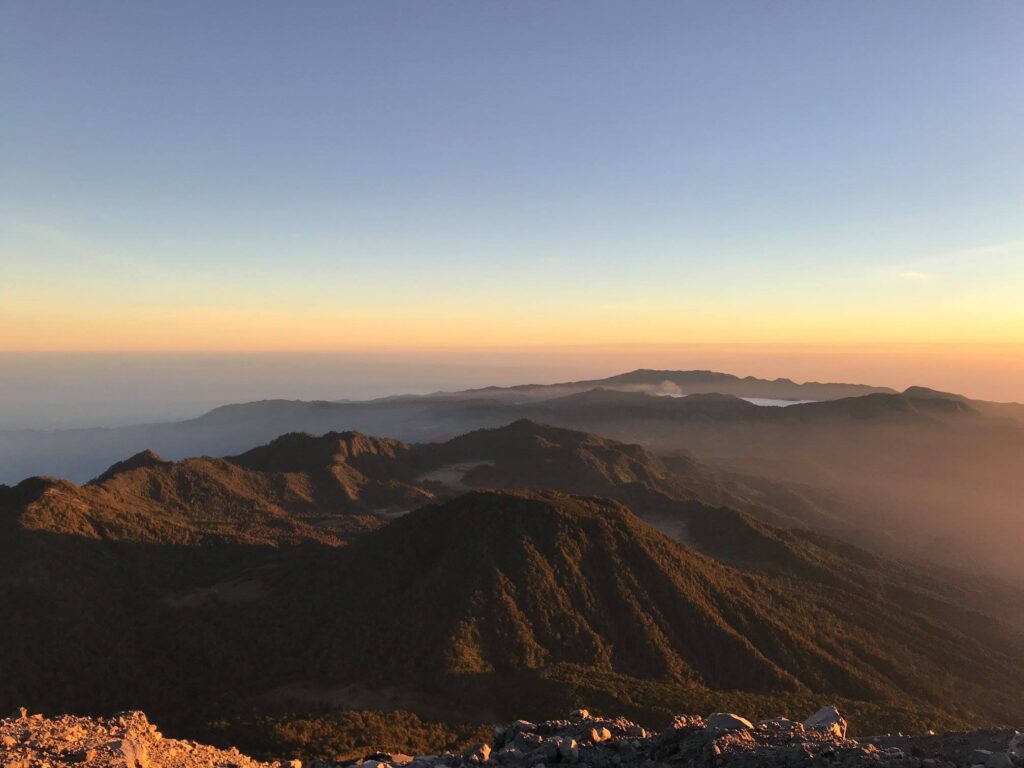
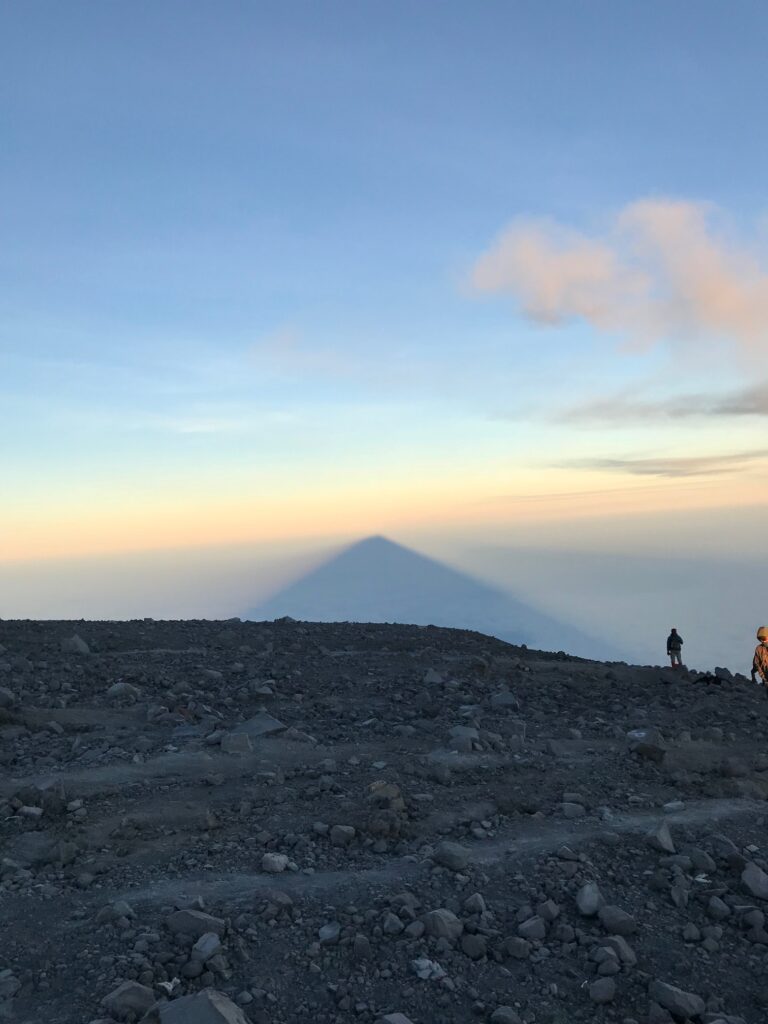
The great roar of a volcanic eruption greeted us when we were up there. Apparently, the Semeru hike can only be done from one side of the volcano since the other side would be too dangerous due to fresh lava and smoke. It was really active. An eruption occurred every 15-20 minutes. Our guide also told us that it was dangerous to inhale the air after 11 o’clock in the morning because the wind would blow smoke this way. That was the reason for the climb to start before dawn. Our guide prepared us hot chocolate while we waited to see the sunrise. We were very lucky with the weather and when the dawn came, the view from the top of Java was absolutely amazing. It was impossible to capture it all in photos. Such feeling of elation and accomplishment was topped up with the view above the clouds.

First sight of lava and smoke from the summit.
First light
Above the clouds
An eruption
Top of Java
Towards Mt.Bromo
The shadow of Semeru
Coming down was easier.

We made our way down before seven. The way down was so much quicker as all we did was literally sliding down. By half past eight, our guide was handing each of us a can of coke to celebrate our climb. We had about an hour to rest and pack our belongings. We would have to make our way back to the village, then to Surabaya within a day. We walked back the way we had come. Stopped to have quick lunch also at Ranu Kumbolo. We reached the village at around 5 o’clock. The jeep then picked us up and we reached Surabaya at around 8 or 9 o’clock in the evening. Technically, this was the day when most walking was done. Since we were up at midnight, start hiking at one. Then almost non-stop, we walked till 5 o’clock.

It was really a rewarding experience. And I owe this to my two travel and trekking companions. They are among the best travel buddies that I could have hoped for.

Trekking in style.

Till we climb again!

Why We Sleep by Matthew Walker: A Review

It is a book that has been featured in different episodes of podcast I listen to. I have heard people talking about it just like last year when Sapiens became a must-buy book of every household. The fact that this book was mentioned in the context of enhancing productivity caught my attention. Without having to read it, you would probably get the idea straight away. The book will just tell you to sleep more. I was sleeping around 6 hours a day and I thought that was enough. It took me a while to get hold of the book and read it. After finishing it, I had no hesitation to recommend this book to you too, dear readers.

I would say the outstanding feature of this book that is worth commending is the scientific evidence that backs up the author’s claim/proposition. For me, the basic fact of life and the rule of thumb that I had stuck to before finishing the book was that it is good to get enough sleep. I vaguely knew that good sleep helps you function better the next day. Yet I did not know the extent of the profound effects of the difference between getting six and seven hours of sleep on our health and, as my podcast presenter correctly cited, our productivity.

“Routinely sleeping less than six or seven hours a night demolishes your immune system, more than doubling your risk of cancer. Insufficient sleep is a key lifestyle factor determining whether or not you will develop Alzheimer’s disease.” These two sentences basically sum up the extent of impact that sleep or indeed the lack of it has on our lives. These claims are not without back ups. Each chapter is filled with scientific evidence. Walker goes on a lengthy explanation of Non-rapid Eye Movement (NREM) and Rapid Eye Movement (REM) sleep patterns to come to a conclusion that our cognitive abilities as well as how well we control our emotions are rooted in how much we have been getting NREM and REM sleeps. The fact that both types of sleep occur in unequal intervals throughout the night means that waking up super early (at 4 or 5 am) may deprive you of motor-skill enhancement caused by NREM sleep that is concentrated in the later hours of sleep.

The second feature is that the outcome of researches in the book is new and fresh. You may argue that there are tons of books on sleep in the market. However, Walker has done quite a wide range of researches on sleep. Many of which have been revealed and explained for the first time in this book. I personally found the experiments relating to memory fascinating. While I cannot remember exactly how it was done since there were a few similar experiments conducted (and perhaps I did not get the needed sleep last night!), the conclusion was that after learning new things and not getting good sleep that night, you won’t be able to remember the things you learned very well. That sounds normal. But it was found that several recovery sleeps after that did not help at all. This means if you fail to sleep well on the day you learn something new, you will have a good chance of not being able to learn it well at all.

The third reason why I would recommend this book to anyone is that it is immensely relatable. The book is filled with anecdotes of urban myths that we all know (and believe in) too well. Each of those myths is deconstructed and debunked by data yet some myths have also been confirmed again with scientific evidence. One example is that there are people who tend to wake up early but there are also some people who have been engineered from birth to go to bed and wake up a bit later. The book does not intend to answer all questions relating to sleep. Walker admits that the science of sleep is a large sphere and there are researches and experiments going on as we speak. Yet the book has made good grounds in this field and has, through Walker’s skillful writing, invited others to spend some of their resources researching about sleep.

While Walker encourages readers to read his book before sleep, my experience does not suggest you doing so, in particular when reaching chapters on effects of the lack of sleep on health. Throughout the two-week period that I spent reading this book, I suffered from the inability to go to sleep for many days. I would suggest you read it during the day. Or if you cannot help it, early in the night.

หนึ่งทศวรรษหลังลาสิกขาจากร่มกาสาวพัสตร์

ช่วงใกล้วันหยุดยาวเนื่องในวันเข้าพรรษาและวันอาสาฬหบูชาที่ผ่านมา เป็นจังหวะเดียวกับที่พี่ ๆ ที่เคยบวชหมู่เป็นพระนวกะพร้อมกันเมื่อช่วงเข้าพรรษาปี 2553 ได้ชวนผมเข้ากลุ่มไลน์ เพื่อเป็นช่องทางติดต่อ พูดคุย ธรรมะบ้าง ไม่ธรรมะบ้าง ทำให้ผมนึกได้ว่า บัดนี้ ก็เป็นเวลาล่วงสิบปีแล้ว เลยอยากจะนึกสะท้อนบทเรียน สิ่งที่เคยตั้งใจไว้เมื่อสิบปีที่แล้ว ปัจจุบันเป็นอย่างไรบ้าง

ผมบวชเมื่ออายุ 20 ปีพอดี เป็นช่วงที่กลับมาเมืองไทยระหว่างปิดเทอมฤดูร้อนหลังเรียนจบ A-level และกำลังรอผลที่ยื่นเข้ามหาวิทยาลัย ในมุมมองผมตอนนั้น ผมรู้สึกว่า จะบวชทั้งที ไม่ใช่เรื่องง่าย เพราะต้องมีความพร้อมหลายประการ ไม่ว่าจะเป็นความพร้อมด้านร่างกาย ไม่บังเอิญเจ็บป่วย ด้านหน้าที่การงาน และความพร้อมด้านจิตใจที่จะต้องถือศีลและประพฤติปฏิบัติตนภายใต้ร่มกาสาวพัสตร์ ผมตั้งใจว่าหากจะบวชก็อยากจะได้ศึกษาหาความรู้ ได้ฝึกปฏิบัติอย่างเป็นเรื่องเป็นราว

นึกขึ้นได้ว่าเมื่อตอน ม.4 โรงเรียนเคยพาไปเข้าค่ายพุทธบุตรที่วัดปัญญานันทาราม ที่คลองหก ในช่วงที่เข้าค่ายสามวันสองคืน พวกเราถือศีลแปดข้อ และนอนกางมุ้งใต้กลดในโรงนอน ฝึกนั่งสมาธิอย่างจริงจัง และที่วัดก็ไม่มีสิ่งอำนวยความสะดวกมากมายเกินความจำเป็น ไม่มีโบสถ์สีทองอร่าม และพระอาจารย์ที่อบรม ก็มุ่งเน้นการสอนให้เข้าใจหลักธรรม และสอนการปฏิบัติ ผมจึงได้ไปลองค้นหาก็พบว่าวัดปัญญานันทารามเป็นวัดที่หลวงพ่อปัญญานันทภิกขุมีดำริให้สร้างขึ้น ส่วนตัวท่านเองนั้นเป็นเจ้าอาวาสอยู่ที่วัดชลประทานซึ่งมีการจัดบวชหมู่เป็นประจำทุกเดือน แม้ในเวลานั้น หลวงพ่อปัญญานันทภิกขุท่านจะมรณภาพไปแล้ว แต่ธรรมเนียมการบวชหมู่ พิธีที่เรียบง่าย ไม่มีการแห่นาค และการเน้นการสอนหลักธรรมและการทำสมาธิซึ่งกลายเป็นสิ่งที่อยู่คู่วัดชลประทาน ก็ทำให้ผมรู้สึกว่าอยากจะบวชที่วัดนี้

ผมได้เคยเขียนเรื่องราวเกี่ยวกับการบวชไว้ในบล็อกเก่าของผม ในชื่อเรื่อง “ใต้ประทีปธรรม สิบห้าวัน ที่วัดชลประทานฯ” มีทั้งหมดสิบสองตอน สามารถติดตามอ่านได้ที่นี่ครับ จะมีรายละเอียดตั้งแต่ตอนเตรียมตัวบวช จนกระทั่งวันลาสิกขาครับ

ก่อนที่จะลาสิกขา ผมได้มีโอกาสฟังเทปธรรมเทศนาโดยหลวงพ่อปัญญานันทภิกขุที่เปิดในช่วงที่พระนวกะรับบาตรที่ลานหินโค้ง ท่านกล่าวไว้ทำนองว่า แม้จะเป็นฆราวาส เราก็สามารถบวชได้ เรียกว่า “บวชใจ” คือตั้งมั่นปฏิบัติในศีลในธรรม เจริญสติ ก็ถือว่าเป็นการบวช ผมฟังแล้วก็ตั้งใจว่า หากลาสิกขาไปแล้ว ก็จะพยายามบวชใจ พยายามครองสติ และนำเอาวัตรปฏิบัติและสิ่งที่ได้เรียนรู้ระหว่างเป็นพระนวกะมาปรับใช้ในชีวิตประจำวันให้ได้มากที่สุด แม้จะมีโอกาสบวชเป็นเวลาสั้น ๆ สิบห้าวัน แต่ก็เป็นสิบห้าวันที่มีความหมาย

สิบปีผ่านมาแล้ว ผมอยากจะสรุปสิ่งที่ได้เรียนรู้ สิ่งที่ได้คิด และปฏิบัติต่อเนื่องมา อาจจะห่างไปบ้างในบางเวลา แต่เมื่อมีเวลาก็พยายามจะกลับมาปฏิบัติให้ได้เช่นเดิม เหล่านี้คือข้อคิดที่ผมได้จากการบวชและยังคงอยู่กับผมมาตลอดสิบปีที่ผ่านมาครับ

1. สนใจเปลือกให้น้อย สนใจแก่นของพระพุทธศาสนาให้มาก – ในช่วงที่บวช ผมได้มีโอกาสอ่านหนังสือหลักธรรมของหลวงพ่อปัญญานันทภิกขุ ได้อ่านหนังสือของหลวงพ่อพุทธทาส และได้ฟังคำสอนของพระอุปัชฌาย์ ตลอดจนพระอาจารย์ที่วัด ผมก็ตระหนักได้ว่า ศาสนาพุทธในปัจจุบัน มีพิธีกรรมที่ประพฤติปฏิบัติกันมาตามความเชื่อ ตามประเพณี ซึ่งไม่ได้ผิดอะไร หลายอย่างเป็นเสมือนกุศโลบายให้คนหันมาเข้าวัด หันมาฟังเทศน์ฟังธรรม แต่เมื่อเวลาผ่านไป เราอาจจะไม่ทันได้คิดว่าแท้จริงแล้ว พิธีกรรมเหล่านั้นเป็นไปเพื่อจุดประสงค์อะไร และสอดคล้องกับคำสอนของพระพุทธเจ้าหรือไม่ หากพิเคราะห์เทียบตามพระไตรปิฎก หรือตามหลักธรรมจริง ๆ แล้ว ประเพณีหลายอย่างไม่ใช่สิ่งจำเป็นเลย หรือหากจะทำ ก็ไม่ควรลืมสิ่งที่เป็นแก่นของพระพุทธศาสนา นั่นคือการฝึกจิตของเราให้ดี ให้เกิดปัญญา ให้เห็นว่าทุกสิ่งเป็นอนัตตา จิตที่ฝึกดีแล้ว ย่อมไม่ทำในสิ่งที่ไม่ดี ย่อมแสวงหาในสิ่งที่ดี และย่อมไม่ยึดติดแม้กับการทำบุญ

ตลอดสิบปีที่ผ่านมา ผมพยายามลดการเอาตัวเองเข้าไปยุ่งเกี่ยวกับพิธีกรรมที่มากเกินความจำเป็น โดยเฉพาะพิธีกรรมที่เป็นเสมือนเปลือกหนาบดบังแก่นของคำสอน และพยายามจะเตือนตัวเองเสมอว่า โดยที่พิธีกรรมต่าง ๆ เป็นเพียงเครื่องช่วยให้เข้าถึงพระพุทธศาสนา หากบางครั้งจะทำไม่ครบขั้นตอนบ้าง แต่ไม่ได้ขัดกับหลักคำสอนที่เป็นแก่นของพระพุทธศาสนา ก็ไม่เป็นไร

2. สิ่งที่ติดตัวมาอีกประการหนึ่งก็เกี่ยวโยงกับข้อแรก นั่นคือการฝึกจิต ผมรู้สึกดีใจที่ได้มีโอกาสเรียนกรรมฐานในช่วงที่บวช ผมจำได้ว่านอกจากการเรียนหลักธรรมแล้ว พระนวกะที่วัดชลประทานฯ จะได้ฝึกปฏิบัติกรรมฐานทั้งช่วงเช้า บ่าย และค่ำ ผมได้เรียนรู้ว่า การฝึกจิตแท้จริงแล้ว ไม่จำเป็นต้องอยู่ในท่านั่งขัดสมาธิมือประสานกันและหลับตา นั่นเป็นเพียงหนึ่งในวิธีการกำหนดให้จิตนิ่งเท่านั้น แต่การฝึกจิตยังรวมไปถึงการเดินจงกรม แม้แต่การนอนก็สามารถทำสมาธิได้ หากไม่หลับเสียก่อน พระอาจารย์สอนว่า หลักใหญ่ใจความคือการตามจิตเราให้ทัน ให้รู้ว่าขณะนี้กำลังทำอะไรอยู่ นี่ก็คือการมีสมาธิอย่างหนึ่ง ซึ่งเมื่อรู้เช่นนี้ เราก็สามารถทำสมาธิที่ใดก็ได้ วิ่งมาราธอนอยู่ก็สามารถกำหนดซ้ายหนอขวาหนอและทำสมาธิไปด้วยได้

ในระหว่างบวช ผมได้อ่านหนังสือที่หลวงพ่อปัญญานันทภิกขุบรรยายหลักธรรมคำสอนสำคัญของพระพุทธศาสนาไว้ หนึ่งในเรื่องที่ผมประทับใจ คือเรื่องเกี่ยวกับความสำคัญของการกำหนดจิต เรื่องมีอยู่ทำนองว่า มีผู้สอบถามมากมาย ว่าสิ่งนี้ทำแล้วผิดศีลไหม สิ่งนั้นทำแล้วจะบาปไหม พระสงฆ์ช่วยดูแลแม่ที่ป่วย ทำให้ต้องแตะเนื้อต้องตัวสตรีเพศ เช่นนี้ผิดไหม เป็นต้น ซึ่งหลักสำคัญคือหากจิตคิดดีแล้ว กายกรรม วจีกรรม ก็ไม่สามารถทำผิดได้ นี่คือสิ่งที่อธิบายว่าเหตุใดการทำสมาธิจึงสำคัญ และพระพุทธเจ้าก็ได้เคยตรัสไว้ว่า “แม้จะได้อุปสมบทเป็นภิกษุรักษาศีล 227 ข้อ ไม่เคยขาด ไม่ด่างพร้อยมานานถึง 100 ปี ก็ยังได้บุญกุศลน้อยกว่าผู้ที่ทำสมาธิเพียงให้จิตสงบนานเพียงชั่วไก่กระพือปีก ช้างกระดิกหู”

การทำสมาธิในรูปแบบต่าง ๆ จึงเป็นสิ่งที่ผมพยายามทำมาโดยตลอด แม้จะไม่ต่อเนื่องในบางเวลา แต่ก็พยายามทำหากโอกาสอำนวย

และนี่ก็คือบทเรียนสองเรื่องที่ผมถือปฏิบัติมาในช่วงเวลาสิบปีภายหลังจากการบวชที่วัดชลประทานฯ สำหรับอนาคต ผมตั้งใจจะทำสองข้อข้างต้นต่อไป พยายามลดละกิจกรรมหรือพิธีกรรมที่เป็นเสมือนเปลือกหนาของพระพุทธศาสนาหากไม่จำเป็น และจะพยายามตั้งใจฝึกจิตให้ดีขึ้นครับ

Lessons from Monkhood: A Decade On

Recently, I was added to a group of fellow former monks in the batch of 2010. We were ordained together as a group at Chonlapratarn Rangsarid temple on the outskirt of Bangkok before the Buddhist Lent in 2010. Time flies. It has been a full decade since I experienced the tranquility and engaged in intensive practices of Buddhism for 15 days. Before I left the temple after the period of slightly more than 2 weeks, I promised myself to continue building on the lessons I learned at the temple to become better at practicing Buddhism, free(er) from all the rituals.

A path to ordination
For Thais at least, you can be ordained as a novice or a monk depending on your age and your willingness. Those under the age of 20 can only be ordained as novices whereas those 20 or above are eligible to be ordained as monks or novices. The main difference is that a novice adopts 10 precepts or rules (dasa-sila) while a monk adopts a more disciplined life with 227 precepts. Many Thai men choose to be ordained at least once and there can be several reasons for this. Several want to take some time off their busy lives to learn more about the Buddha’s teachings and practice meditation under close guidance and supervision of senior monks. The ideal period for many is at least 3 months of the Buddhist lent. Should time be not on your side, 30, 15, and 7 days are convenient alternatives.

My father passed away when I was 19. I had a choice of becoming a novice on the day of my father’s cremation as per the prevailing custom or I could wait until I became 20 to be ordained as a monk. I chose the latter. For me, monk ordination would be a period of intensive learning of the key teachings of the Buddha with the focus on practice – how to cut yourself from all the so-called ‘earthly desires’, what are the effective ways to meditate, for example.

My high regard for ordination as an intensive Buddhism course stemmed from the time I attended the compulsory ‘Buddhism Retreat’ with my school when I was 16. The temple was founded by Panyanantha Bhikku, a senior monk who devoted his life to resist widespread superstitions that claim to be Buddhism-related. He was also close to Buddhadasa Bhikku, a well known monk who focused on practices and denied extravagances and unnecessary rituals. At the Retreat, we were barred from the outside world, staying in a forest-like temple on the outskirt of Bangkok eating two meals a day and learning to meditate. I liked the style and this became the foundation of my choice for the temple which I was to be ordained at.

I was ordained at Chonlapratarn Rangsarid temple, where Panyanantha Bhikku was the abbot. He passed away just a few years before. The new abbot used to be his close assistant. I registered to be ordained as the youngest in the 2010 Buddhist Lent batch as I only turned 20 a few months before the date of ordination.

Building Blocks

Chonlapratarn Rangsarid temple where I stayed as a monk had a predetermined set of activities for the newbie monks. I would say it was an intensive Buddhism course. This was how a day in a life of a monk looked like at the temple.

Newbie monks would wake up before 4 am, wash and head to the chanting hall. Following a half-hour chanting, we would meditate for another 15-20 minutes. We would then leave the temple to take up alms from people who live nearby. Since I was one of the youngest, my route was one of the furthest from the temple. Afterwards, we would sit around in semi circle in the temple to take up alms from those who had come to make merits at the temple. Following that, we would have breakfast at around 7-7.30. We would be given some time to tidy up our room, clean up the plates and do some washing. At around 9am, we would attend classes of Buddhism and meditation. Around eleven, we would be having lunch and this would be the last meal of the day. In the afternoon, we would go back to do more meditation. At around 3-4pm, we would be back in our rooms reading or exchanging views on certain topics related to Buddhism. Newspapers were not allowed and talks of ‘earthly topics’ were discouraged. Around 5-6pm, we would attend the assembly where our supervisor would talk to us about all sorts of things. Problems, issues or ways to improve our practices. At seven, we would have evening chanting, some more meditation before retiring to sleep at 8 pm.

A decade on

The temple’s attitude towards ordination is not for newly ordained monks to sit still during the day. Rather, the temple encourages monks to make the most of their time studying and practicing meditation which I am forever grateful for. The two-week period was clearly becoming one of the defining chapter in my life. Before leaving monkhood, I was determined to apply what I learned and continue some of the practices, especially meditation to the best of my ability.

And here I am, a decade on. I want to take this opportunity to reflect on the ideas, lessons and practices from my short but meaningful monkhood.

Free(er) from Rituals

In Thailand at least, what I take to be core values and teachings of Buddhism have been decorated with several rituals. Practiced over the years, people have stopped questioning the relations between such practices and the core values and teachings. I mentioned earlier that there is a prevailing custom for a male relative of the deceased to be ordained as a novice on the day of the cremation. I later learned that, during the time of the Buddha, there was no such thing as ordination during the funeral of the deceased with a belief to help sending off the deceased to somewhere blissful. Ordination had only one purpose which was to rid oneself of earthly desires to pursue nirvana (never to be born again).

I learned also that some rituals were nice and satisfying to have but they were not necessary. Some were even contrary to the teachings of Buddhism which encourages individuals to be attentive to their current state of mind and to be weary of extreme happiness or sadness.

Therefore, after finishing my monkhood, I was determined to try focusing my life on the core values and teachings of Buddhism and cut down on excess rituals as much as I could. I am glad that I can still hold on to that commitment, at least to a certain extent.

Meditation as a part of life

Meditation was a major part of our routine when living as monks in Chonlapratarn Rangsarid temple. Many of us may have this idea in mind. Meditation is something you do sitting down, not moving and thinking about only one thing for a certain period of time. At the temple, we were introduced to walking meditation, lying down meditation, and even meditation while engaging in activities. Also, meditation is not only about blocking all thoughts and focusing only on our breathing but it is also about being attentive to whatever thoughts and feelings that may arise at any given moment – knowing yourself at the current state of mind.

I found the meditation lessons very useful and I still practice a form of meditation every now and then. It has helped me looking after my emotions and reminding me to focus on the present.

To sum up, the period of 15 days spent being a monk was a defining period of my life. It was a different life, simple, tranquil yet full of meaning. Over the past ten years, I am glad to have had the strength to focus on the substance of Buddhism’s core values, teachings and practices rather than various forms of rituals that have been added over many generations. As an earthly layman, an excuse obviously, I have not been doing as much meditation as I had hoped. Yet, the methods I learned at the temple have continued to be an excellent guide whenever I choose to meditate. I have tried to integrate meditation into my daily routine. Building on some success, I shall continue to do so.

With mum on my ordination day
July 2010
With the statue of Panyanantha Bhikku, a highly regarded monk who was the former abbot at the temple

The strength of a Jade: a tribute to my late grandmother

It has been almost two weeks since I learned of my paternal grandmother’s passing. A second-generation Chinese originally from Southern China, her Thai name ‘Yookfa’ or ‘Yok Fa’ means ‘jade from the sky’. I wish to devote this post to the memories of my late grandmother, my very own jade lady.

One of the qualities of a jade is its strength. And this had also been a character of my grandmother. She had shown remarkable strength and resilience to the tough episodes throughout 86 years of her life.

Born to a Chinese immigrant family, her childhood was not easy. It was an episode of struggle to make ends meet. Her family could only afford to send her to a kindergarten. She left school unable to read or write and remained so until the end. She spoke Hakka at home while learning to speak Thai with Chinese accent to others.

When she reached adolescent, in line with the social norm and immigrant Chinese sub-culture at the time, her family told her that she would be married to a guy several years senior, also from a Hakka Chinese family. The guy would become my grandfather.

At a very young age and pregnant with the first child, she had to take up responsibility of feeding workers of an orange plantation which belonged to my grandfather’s family. My grandparents had eight children altogether. The burden of raising eight children, cooking for plantation workers, and looking after the household fell on her shoulders. My dad had also recalled that at the time, it was very difficult to keep the children well fed. There were times when priority of having chunks of meat or delicious desserts had to be given to the younger siblings. The toll of her hard work would befall her health when she later suffered from a chronic hunchback. Despite these, she managed to send all her children to university.

When our family’s small business was badly affected by the Asian financial crisis of 1997-1998, my grandmother continued to be a beacon of hope and encouragement for everyone. Not long after, she lost her granddaughter (my cousin) in a fire that burned down my uncle’s home. Then my uncle was hit by stroke, becoming almost paralysed that he has needed almost constant care.

In 2009, the sudden passing of my dad must have brought much grief to her as he was the first of her children to pass away. Not long after, my grandfather, her lifelong husband, departed this world also suddenly. Yet she embrace the sorrow as these were facts of life and continued to stay strong for the living.

Despite the chronic hunchback and a heart bypass surgery, she had been an active and healthy lady. Her inability to read and write did not stop her from acquiring knowledge. Only a few weeks ago, we talked on the phone and she would have a series of up-to-date information on how to reduce the risks of COVID-19 infection.

Throughout the years, I have learned a lot from witnessing the strength of heart found in the character of my grandmother. She is not with us anymore but her strong spirit lives on.

I look up at the night sky. There is a bright sparkle, from a beautiful jade.

On Behavioural Economics

I have just finished reading two books on behavioural economics, a topic that I have been interested in for some time but more so during the COVID-19 pandemic. Many of us who follow economics may have adhered to the notion of rational human beings as the basis for all economic principles. Every decision an economic agent, i.e. every one of us, makes is a carefully calculated one based on the information one has at the moment. However, according to Behavioural Economics: A Very Short Introduction, in real life, divergence from this appears more too often. “Our decisions are affected by social and psychological influences, as well as a rational calculation of benefits and costs” (Baddeley, 2017). Decision to buy, for example, does not follow the incentives of price and quality. We are often influenced by a number of factors. The availability factor – the information or memory one can quickly draw – has guided many of our decisions. You may know friends or relatives who are weary about going on a plane because of the vivid headlines on plane crashes even though air travel is, as data suggests, one of the safest ways to travel. We are also reluctant to move beyond our default options in a number of things ranging from installation of computer softwares to retirement plans. Time and time again, we decide based on certain reference points. When you are looking for a television set and found out that three of your friends have recently bought one each for USD500, you are likely to be prepared to pay roughly similar amount while in fact you can get it much cheaper.

Turning to COVID-19, several analyses have concurred that some of the most successful measures to control the virus require a high degree of localised efforts. This, together with the fact that the front line of the fight against any disease lies with each individual person, makes it even more useful to include some behavioural economics data such as how people in an area respond to an outbreak of a disease. What influence people’s decision to leave home and see doctors. Even food-buying behaviour may also be relevant.

Once the data is gathered, policymakers can employ some ‘nudges’. According to Thaler and Sunstein, a ‘nudge’ is a choice architecture that influences people’s behaviours but does not prohibit people from choosing otherwise. Since behavioural economists argue that people tend to exert their inertia. They tend to stick to default options. If governments/local authorities make these default options something that would be good for their health, a small change can lead to satisfying results in disease control. Hence, application of behavioural economics can become an effective tool to help local governments decide policies and measures that are effective and appropriate to respective communities. Having gone through the peaks, many governments can still use information on people’s economic behaviour to design and implement economic recovery plans.

Behavioural economics seems to me to be a very interesting field which opens up ways to see and solve problems from different perspectives. It is certainly something that I wish to continue reading on.

Renewable hope on renewable energy

When I was a kid, solar energy seemed to be many years off from being put into full commercialisation. It looked novel but could produce only a meagre amount of electricity compared to other forms of energy raw materials such as coal and oil. Yet the latter are fossil fuels which are the source of pollution and greenhouse gases that have had detrimental effects on the climate. To reduce greenhouse gases, we have all come to agree that it is almost impossible to ask billions of the world population to alter their behaviours. Given the continued increase of the world population and the growth (minus COVID-19) of the emerging economies, demand for energy will not fall. Thus, there has been some convergence internationally that the way out is to develop renewable sources of energy which do not pollute the air and give out greenhouse gases.

Over the years, we have seen continued efforts to produce solar cells on an industrial scale. Several countries started allowing private entities with solar cells to sell and distribute the excess solar energy produced on their rooftops to the national grids. Domestic hot water began to be powered by rooftop solar cells. But these examples were tiny. We could not have achieved the goals of reducing fossil fuels at that rate.

However, the hope has been renewed. In last week’s edition of the Economist, the article on solar energy is heartening. At present, in Britain, solar energy represents almost 30% of the UK’s electricity supply. This is a sizeable proportion. When I was a student in the UK about ten years ago, if I’m not mistaken, the figure for renewable energy (with solar energy included) was in the range of 20% of the total electricity supply. While one needs to be aware of the caveat that the almost 30% occurred on a day when there was a decline in demand and thus there was lower-than-usual demand for electricity produced from coal and gas, what it tells us is that solar energy is becoming more mainstream. The article also provides some light on how to improve efficiency of solar cells even further by delving into the intricacies of technical details.

The same edition of the Economist also suggests something that interests me. During periods of lockdown in many countries, there were accounts of clear blue skies signifying low level of pollution in large cities across the world. Yet one cannot deny the devastating economic impact from COVID-19. Millions of people have been out of jobs and many more will join in the next few weeks. The way to alleviate this, the Economist suggests, is by refocusing some priorities at the policy level and turn those who are out of jobs to help making renewable energy such as solar power more effective and efficient. This can be done by retraining some workers. If this is successful, we will probably be able to shorten the time it takes for renewable energy to take up the majority of electricity supply.

Thus a renewable hope on renewable energy.

A Digital Minimalist?

I have read this year’s much recommended book “Digital Minimalism” by Carl Newport last week. I have found the book crisp, practical and easy to read. Here are some of my views after reading it.

Let me start by way of introducing the gist of the book. Newport mentions very early on that he is encouraging a philosophy of “Digital Minimalism“. The idea behind this is not new, he says. Many people understand that too much time spent on social media is not good for our actual social health and the greater social fabric. However, many try the so-called ‘social media detox’ and have found that it does not work. With the carefully engineered algorithms by big tech companies behind social media, Newport reiterates, they will want you to spend as much time as possible swiping and staring at the screen. It is extremely difficult to refocus your behaviour simply with occasional ‘social media detox’. Instead, he proposes that we should (1) stop using every non-essential use of new technologies including social media altogether for 30 days; (2) during that period, we will need to find activities that provide us with values and bring us close to life goals/targets; and then (3) we will have to plan with ourselves how best to reintroduce certain bits of new technology into our lives so that such technology is truly beneficial. He then goes on to mention several examples that we can apply when trying to adopt this philosophy of “Digital Minimalism”.

First and foremost, I agree with the crux of this philosophy. I am sure many of my dear readers also share the same understanding that there is so much going on behind the benign interface of social media applications. We all know that the next minute after you leave a social media application to search for a hotel for your next trip (after the COVID-19 pandemic eases of course), you will find several advertisements of hotels in that particular area popping up like mushrooms. So we will need to be strong in not letting new technologies control and manipulate you (too much). To this end, I fully agree with how digital minimalists regard new technologies.

“Digital minimalists see new technologies as tools to be used to support things they deeply value—not as sources of value themselves.”
Newport, Cal. Digital Minimalism (p. 252).

The next thing I agree with is that we need to find what we deeply value. What are our life plans. When we think hard about these, then we will be able to gear our use of new technology to effectively bring us closer to those.

I feel a bit uncomfortable however with the implicit message that seems to strike and single out social media and their users. The impression I have from reading the book is that long period of using social media equals compulsive use. I totally agree that compulsive use of any kind can be detrimental to your health, values and life goals. But this applies across the board, to TV addiction, video games, and other activities be it analog or digital. For me, compulsive use to the point of addiction to something that will prevent you from doing the things you deeply value or contributing to your life goals is not good. Put another way, we should not simply adopt everything that is new in our lives without thinking about what values they give us and how best to extract the benefits from them.

As I said, I share the view that new technologies or indeed any technologies should be seen as tools to support my values and life goals. I do not know if I can be called a digital minimalist since I would regard myself as a moderate user yet I am being careful to ensure that technologies are there to support me and not the other way around. I might have contributed to their profits. But this is a byproduct and the cost I am willing to pay to continue supporting my values and life goals.

With this thinking, I have adopted a variant of digital minimalism for some time. I must say though that this came with time. When I was younger (and at university), I also procrastinated for hours on Facebook. The article that made me rethink my daily dose of social media which I still refer to from time to time is the one by Charles Chu on Quartz. It basically tells you that without spending time compulsively swiping on social media and other addictive activities, you will have time to read at least 200 books. This prompted me to think hard about my core values, what are my goals, what I want to achieve by the end of the year, what activities I wished I had time to do more, and how would I restructure my time and best reap the benefits of new technologies I had at hand. At the end of last year to set my reading goal this year to 50. I am devoting more time to keeping my blog active and finishing my novel. I am picking up on long-distance running and taking more care on my body since a senior colleague of mine once said that you have to get into shape by 30!

Hence, I now use Facebook and Instagram to keep track with my friends and families but perhaps not more than 10-15 minutes everyday for that purpose. I go to Twitter at various intervals during the day to take in some thoughts (and memes) by people I follow. I still communicate a moderate amount through these channels. For me, it’s also good to get some feedback on your cooking or practice some creativity at hashtagging. And I agree, sometimes I am there just for fun. But that is part of my core value. To lead a balanced life. (but I also constantly remind myself that I do not overusing social media purely for pleasure purposes…)

Having read the book, I find quite a few examples Newport gives to support a healthy social life very useful. One of them is to find “conversation office hours”. Newport mentions that he got this from an executive in Silicon Valley who sets aside 5.30pm as the time he will always be available for phone calls. Those who call will not need to schedule beforehand. It gives the caller some comfort, knowing that they will not be disturbing him. So Newport suggests we do the same; setting a conversation office hours at certain time in a day and promote this to those in your inner circle that you would like to have conversation with. I am now setting one up myself.

To conclude, I like the book and I share the philosophy of “Digital Minimalism“. There are quite a few practical (and proven) guidance and examples that we can adopt and follow to ensure that the way we use new technologies contribute to a healthy lifestyle, our deeply held values, and, if I may add, our life goals. While I understand why the book has a tendency to strike social media in particular, I would urge my dear readers to apply this philosophy across the board to include other activities that might be addictive and induce compulsive use. See if they are supporting or contributing to your values and goals. If not, then maybe it might worth a little readjustment.

Life of an enthusiast