Category Archives: Thoughts in English

Post-COVID-19 Sick Leaves

All over newspaper columns are talks about the new normal, how life will change once the outbreak of COVID-19 is over. While I believe that technology will play a greater role in our daily life, I think it is too early to go so far as concluding what the world order will be like. One small thing that I have been pondering over the weekend is the idea of sick leave and working from home.

Soon the idea of working from home will be the norm. I have been hearing my friends in the private sector talking about the future of office work. In terms of space, a small or medium-sized company, for instance, will not need a large working space since personnel may rotate to come into office / work from home / have flexible working hours. In terms of the work proper, many employees, whether they want to or not, are attempting to show their bosses that they are able to deliver the same output / productivity no matter where they are. Trust will be built. By the time this crisis is over, working from anywhere will not make much difference in the eyes of supervisors / employers.

But will this lead to some kind of inconvenient expectation?

I now invite you to consider the idea of taking a sick leave. I am leaving the leaves you take for long-term care and surgeries aside. I want to focus mainly on sick leaves for milder illnesses. The ones that make you feel “Urgh well, I can go to work but I’d rather not go.” With the expectation that you can work from anywhere, since you can continue to reply to emails, type things on your computers or your smartphones, you may be considered not fit to come to office but fit enough to work.

This is not new, no doubt. Even before COVID-19, I’m pretty sure many of us must have heard of bosses who continue to contact and assign work to colleagues during the latter’s sick leaves. But this expectation will be even more entrenched, I believe, after this health crisis.

A few trajectories that I can think of are as follows:

  1. People do not take sick leaves for mild illnesses. A diarrhoea or a mild form of food poisoning or a cold may keep people away from office but they may be reluctant to take sick leaves altogether. All they will do is informing their bosses that they will be working from home today. Hypothetically down the road, will there be no sick leaves for these kinds of mild illnesses altogether? And what implication will that situation be on the well-being of workers since those that suffer from these mild forms of illnesses will still need to work, albeit at the (un)comfort of their homes.
  2. Sick leaves may be taken by a number of hours. If you at least claim that you suffer from mild illnesses, then the company or the employer may deduct say 3 hours from that work day. That means, you have about 8 days to suffer for the accumulated hours to amount to one day of sick leave. This does seem to be quite reasonable. But this needs universal understanding and agreement, at least in that workplace, of what symptoms and illnesses will constitute ‘mild illnesses’.
  3. All illnesses, no matter how mild, warrant and obligate you to take proper sick leaves. This alternative means that all illnesses are treated equal. This way, all employees will be guaranteed a peace of mind. No business nor conference calls. Team meetings can wait until you recover. However, since some companies may have a certain limit on how many sick leaves you can take in a year, this trajectory may result in some people who suffer from mild but annoying illnesses lose out as they have to take proper sick leaves.

I have, by no means, exhausted my thinking on this issue. Perhaps, as the situation develops (and hopefully improves), there are trends and behaviour that warrant me to revisit the issue of taking sick leaves for mild illnesses after the outbreak subsides.
…and I had to cut my own hair

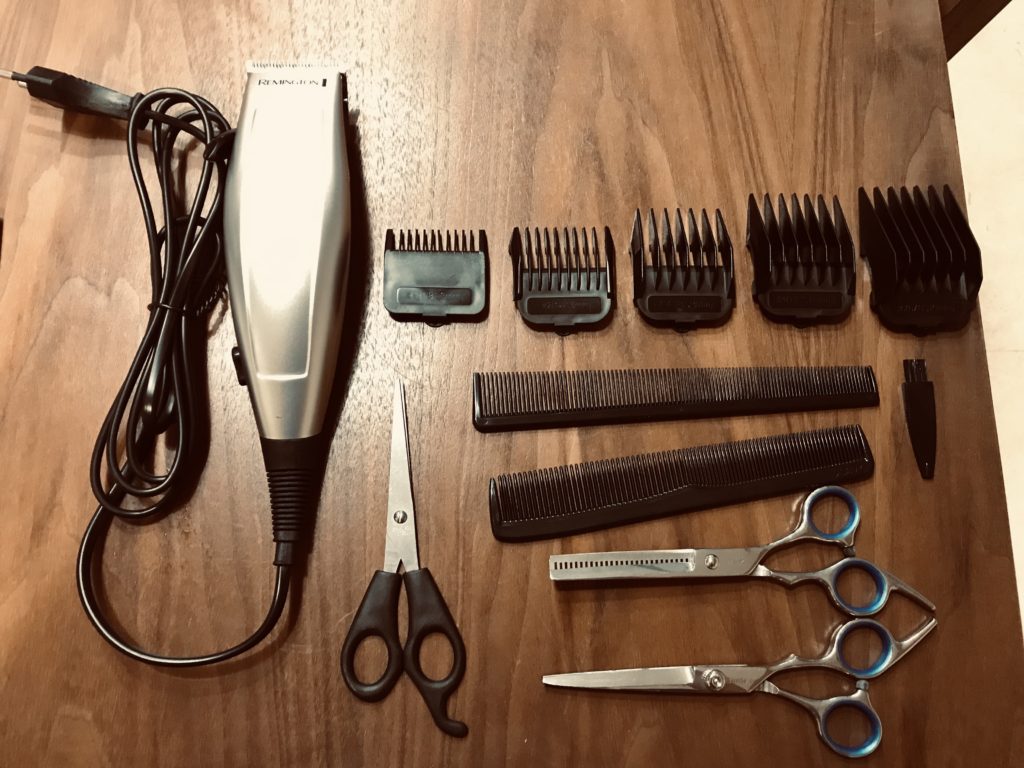
A few weeks ago, when my hair was of medium-length, I mentioned about not being able to go to barbershops due to the measures adopted all over the world to prevent the spread of COVID-19. Since then, I have procured myself a set of clipper, combs, and scissors for my very first self-haircut.

I do not intend to post my photos here. But I want to talk about the preparation and resources I relied on.

First thing first, I had to have an idea of how I want my hair to look like. My hair is best described as a long faded cut. Short but tapered at the sides, longer at the top. So I could not just have the clipper, I would also need a set of ‘trimming guides’, the plastic tops of different lengths to put on the trimmer. And thinning scissors (which I found to be most valuable). Another thing that you should never forget is the hand-held mirror so you can look at the back of your head. I cannot stress how important this is.

Then I studied Youtube videos. There is quite a lot of videos out there teaching how to cut your own hair. A word of advice here, watch a lot of videos and you will be able to decide which technique suits you best. In the end, I only used about half of the instructions from Youtube. The rest, I learned when I was actually cutting my hair.

So here are some of the things I learned.

  • On Youtube, some say you should dampen your hair a bit. I’d say there is no need especially if this is the first time. Doing the cut while my hair was dry allowed me to see how much I cut and whether the cut was equal on both sides of the head.
  • You may also hear that you need to part your hair and put on some hair clips to keep your hair at the top in place, thus making it easier to cut your sides. In reality, my hair was not that long and wouldn’t hold. I even tried rubber band but still, it would work if my top was longer. So I’d say, don’t worry too much about this.
  • Look carefully at how the Youtubers use clippers especially the angles, the finishing and how they blend different layers of hair together. That proved really useful for a fade or an undercut.
  • The back is almost always the hardest. Use the hand-held mirror to guide. If that is too hard, then use your other hand to mark the point where the clipper should stop. This will prevent you getting a buzz cut unintentionally.
  • Thinning scissors are really versatile. Basically, they allow you to just go around the top cutting until you reach the desired length without feeling embarrassed.
  • Have a vacuum cleaner nearby.

Having done it once, I guess I won’t mind doing it again! Good luck!

Tea in a life of an enthusiast

I am a tea person. If you ask me why, I will not be able to come up with a single reason. However, a blend of the following characteristics of tea may offer you, dear reader, a glimpse of how tea has become integral to an enthusiast.

Firstly, tea produces a comfortable and satisfying mildly bitter after-taste. It makes me feel as though I have been drinking a beverage of a stronger character than water yet not too strong. I do not have any scientific proof to this but if I have to speak to someone real close after drinking a beverage, I will feel more confident having had a cup of tea rather than coffee. Coffee, even black coffee without sugar, does produce some after-taste and smell which can put off quite a few people.

Secondly, the smells of different kinds of tea give me pleasure and a sense of calm. Green tea in its purer form (i.e. not blended with any flowers or fruit) has the smell somewhat similar to dry grass. Drinking it gives me a meditating sense of calm. Black tea in certain blends especially citrus fruit and berries is refreshing and stimulating.

Thirdly, tea has a constant effect. To elaborate, whatever effects a cup of tea has on you, they come steadily and constantly. Take caffeine for example. A cup of some blends of black tea has the level of caffeine comparable if not equal to a cup of mild coffee. When drinking coffee, the effect, on me at least, is pretty sudden. After a sip, I am fully awake. But I find that it’s quite different with tea. The wakefulness gradually comes and gradually leaves my body. I will be in a state of moderately alert for longer time. That’s what I meant by tea having a constant effect on my body.

With the various kinds of tea, I have developed a certain tea routine, meaning I have my preferred options of tea depending on the time, the need and the mood.

Morning – on a normal day (i.e. with no meetings), I tend to give myself some caffeine intake through English Breakfast tea. As this is a type of black tea, it has a high enough caffeine content to wake me up. If I have milk nearby, I usually have it with milk. This is what I get from studying in Britain for some time. I have the habit of drinking a cup of black tea with milk. A good black tea for me basically does not produce a strong bitter taste however long that tea has been left in the water.

Afternoon – there is a condition – if I don’t have any coffee that day, then I tend to go for another cup of black tea, an arguably stronger one. At this time of the day, a refreshing smell does help. So I go for Earl Grey or black tea blended with fruit like peach black tea. Without milk please.

Again, a good black tea (for me) must not have strong bitter taste.

But if I have some coffee, then I try not to overload myself with caffeine. After coffee, I might brew some light jasmine green tea.

Evening / after dinner – preferably Oolong tea or strong pure green tea. Mainly because of its perceived benefit of reducing cholesterol. It washes down some of my guilt (devouring in fatty bits of meat) as well. It also keeps me awake when I read or write which I usually do after dinner. Evening tea is usually brewed in a big pot.

I sometimes drink herbal infusions when I just feel like having hot beverage but I have had enough caffeine on that day.

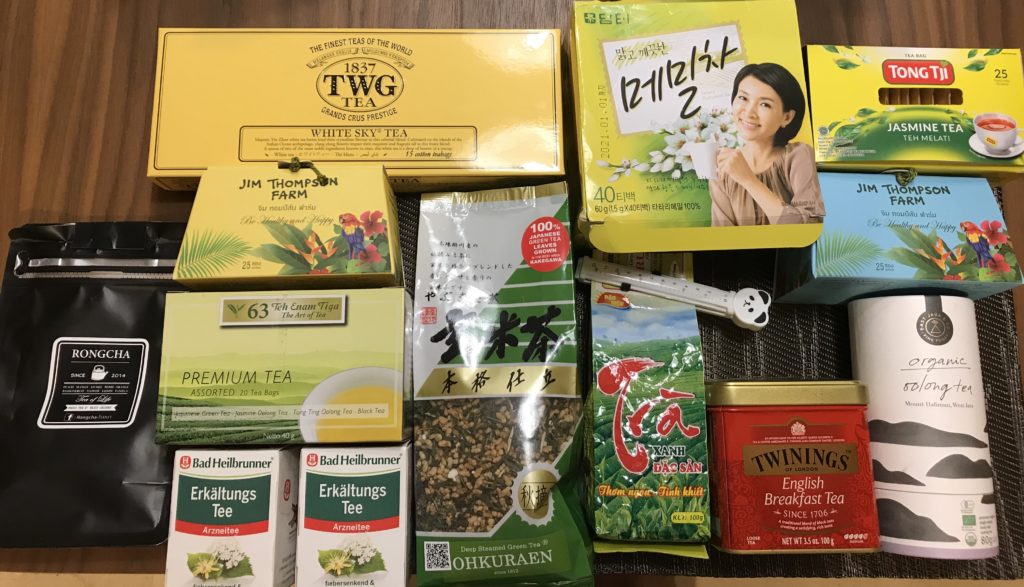
To finish off today’s post, here is my current collection of tea. Some of these are gifts and I am so grateful that you have chosen to give tea to me 😛

When barbershops are closed…

For more than two/three weeks (depending where you are) now that shops have shut their doors to customers. Some of us might miss the restaurants, the bars, or cinemas. But one thing that might concern most guys is the closure of barbershops. Correct me if I am wrong and depending on what you do for a living, guys (between 30-59 years of age) tend to have their hair cut about once a month. By now, many, like me, may start thinking what to do with our hair.

One thing that I am considering is to buy a set of clipper and scissors. During my first year in the UK, it was difficult to find an Asian barber so one of my friends, with her set of special scissors and comb agreed to cut my hair for me. It went well. This nostalgic thought then inspired me to look around Youtube how to cut my own hair.

Youtube clips may be deceiving but they have made it seem easy enough. Clip-on combs that can be put on the clipper allow you to adjust the length of your side and back. Then trim the top with scissors.

At the same time, I have also been warned! It may not turn out the way I wanted and I may have to walk around with a cap long after the COVID-19 situation gets better.

So I guess I will wait a bit until it’s unbearable. Then I will write a short review about it!

2020 Resolution while being at home

By now, most of the world are practicing social distancing. Many companies and organisations have adopted the Work From Home (WFH) arrangement or reduced the time for personnel to physically be at office to keep everyone safe from being infected and infecting others. It appears that social distancing will be a 2020 normal at least for a quarter of the year.

While our choice of activities outside our homes is temporarily limited, what we gain instead is time. Working from home, for instance, saves you from commuting be it by public transport or the comfort of your own cars. You gain, on average, an hour or two everyday. Even if you don’t work from home, you still have to cut down your activities outside drastically. For me, this is a good opportunity to take up the extra time at home and make good use of it for self-development. Here are some of the things that I want to do with the extra time I have. This is my 2020 Resolution while being at home. You may want to think about yours too!

  1. Cooking – I have always wanted to cook better. Perhaps I have been watching too much Masterchef. My usual recipes revolve around stir-fried vegetables with some shredded meat or baked fish. Over time, I have also become bored with my cooking. But you know the feeling of coming back from work and not wanting to cook anymore? Quite often, the hunger gets over me and I end up cooking something quick without paying much attention to taste, composition or ingredients that would enhance the taste of my dishes even further. Moreover, learning a new recipe takes time.

    So this is the time. I can learn a new recipe from Youtube or I can just refine and put more efforts in the dishes I usually cook.
  2. Finance Planning – I do have an extensive (and somewhat sophisticated) financial plan. But I only update it from time to time. So it’s not doing its job of advising me on the best course of action to take financially. So with some extra time, I am hoping to update it more often. Besides, the plunge in stocks around the world is a strong enough incentive for me to review some of my plans!
  3. Keeping fit – Due to the fact that I like to do many things in a day, I allocate exercise to about 3-4 times a week. With the extra time, I hope I can do something to be in good shape everyday. Also, my goal of running a full marathon within this year is still intact. And I am still hopeful that the situation with the coronavirus will ease towards the end of the year. So I am using this opportunity to do some core strengthening and get my body ready for the intensive trainings later when opportunity allows.
  4. Be organised – With work, travel plans, functions, gatherings, it is not easy to have a fifteen-minute sit down to declutter my life everyday let alone to ponder long into the future. This is no doubt a good time to organise and review a long term plan for my life.
  5. Learning – This sounds nerdy and cliché but as a firm believer in lifelong learning, I can’t help but reiterate this idea again. The world is changing at a more rapid speed. The cost from not learning is much higher as knowledge now makes a difference between life and death. A friend of mine once introduced me to online learning platform Coursera. I have not enrolled in any course yet but it may be something worth doing, perhaps on something finance-related!
  6. Writing – To be a good writer, as someone said to me, you have to continue to write – write everyday, he said. Thus, I am trying to get into the habit of coming up with something to write everyday. I am also working on my novel (written in Thai) and I hope to get it done by my 31st birthday.

What is your 2020 resolution while being at home?

Weaving their own future

This is the third and last thread in the series of my takeaways from the SCG Sustainable Development Symposium. I am glad that I have continued writing on it for three weeks in a row. I began the series with the policy-level perspective, followed by a story on a large-scale community project. Cliché as it may sound, this part will be about the next generation.

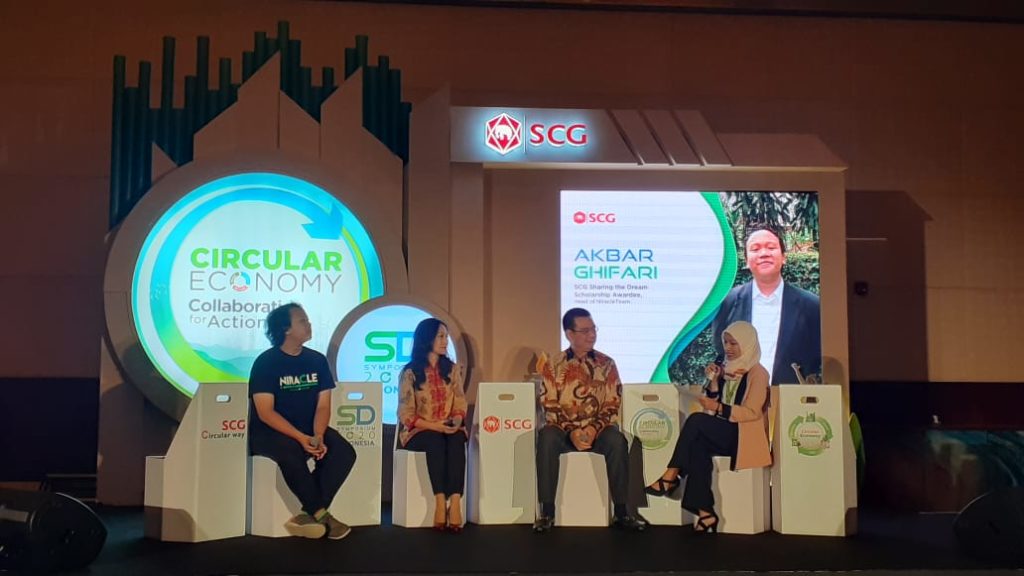
I am not trying to promote SCG but I have to elaborate on this a bit to give you some background. Every year, SCG Indonesia, as part of their CSR initiatives, grants a number of scholarships at various levels. Akbar Ghifari first received a scholarship when he was in high school. At university, he applied for a second scholarship from SCG, this time the scholarship was for him to participate in seminars and training camps that groom young adults to pay more attention to social issues. Akbar had an opportunity to present a project with an aim of providing solutions to social problems. Akbar’s focus has been on fabric waste.

The majority of villagers of Padasuka, Soreang, Bandung are in professional textile industry, 70% to be more precise. Tonnes of textile waste are produced ,and to a large extent, burned every year. Akbar saw this as a problem that needed solving. He thought there should be a better way to reduce tonnes of plastic waste. So he began the Niracle’s first collaborative project, along with 9 other SCG scholars by adding values or produce new products from textile waste.

Small patches of left-over cloth have since been made into decorative roses, pouches, and bags which are then sold. As earnings of the villagers increase, the group has continued to expand their reach even further.

It is a small endeavour, no doubt, but a significant and novel step. Making a product from waste may not be new. But the fact that a group of young adults initiating the project by convincing villagers and working with the community as a team is heartening and admirable. After a while, Akbar and his mates were successful in weaving the new routine of making use of leftover fabrics into the life of villagers.

I am writing about Akbar and his group, Niracle, not because of their work or their products, roses made of fabric petals and fabric pouches. I am writing to support the spirit of youth in realising the importance of waste reduction and initiating their own projects. With the proper support and encouragement, the new generation will be able to embark on projects that will solve problems created by our generation and the generations before us. They will be able to shape their own better future.

I want to see more Akbar.

Akbar Ghifari (left), representative from the Niracle, speaking as a panelist at the
SCG Sustainable Development Symposium on 20 February 2020
Photo courtesy: https://www.jagatngopi.com/

Additional Reference: https://majalahcsr.id/niracle-berbagi-kebaikan-atasi-limbah-kain-dengan-ekonomi-sirkular/

Circular Economy: Beyond Recycling

I had a chance to attend the SCG Sustainable Development Symposium Indonesia 2020 last Thursday. The event was organised by Siam Cement Group (SCG), a Thai company specialising in cement production with outposts in half of ASEAN countries including Indonesia. The company is pretty well-known for its sustainable development approach. Having held the Sustainable Development (SD) Symposium in Thailand for quite a few times, the one last week was the first time outside Thailand.

I have got a few takeaways from the Symposium that rather quite fit the topic of waste management. They are interlinked but for the ease of reading (and writing about them), I am separating them into three consecutive posts. I must say from the start that I am not an expert nor do I aspire to be. Waste is a topic that I am concerned with and I feel passionate enough to write about how we manage it.

As the first in a trilogy, I want to begin by visiting the concept of Circular Economy in the aspect of waste management that goes a little further than recycling.

Most people of my generation as well as my parents’ generation are aware of recycle. We try to recycle paper, plastics, aluminium lids, you name it. And we see on some products sentences that make you feel good “this bag is made of used aluminium cans”, “this book is printed on 20% recycled paper” and I support them. They are good initiatives. Yet from one of the presentations I saw at the symposium, the process of recycle does not mean that 100% of waste will be recycled. This is where the concept of circular economy comes in.

Circular economy, according to the EllenMacArthur Foundation, is a rethinking of the economic system away from its conventional linear form, ‘a systemic shift’ that involves all stakeholders. To give you a clearer picture, in a linear economy, a product may be made from recyclable and non-recyclable materials. Some products are very difficult to separate the materials thus making it almost impossible to recycle even though many components are recyclable. With circular economy, companies (and individuals alike) need to think things through from the initial stage of product design.

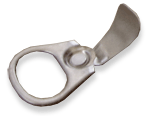
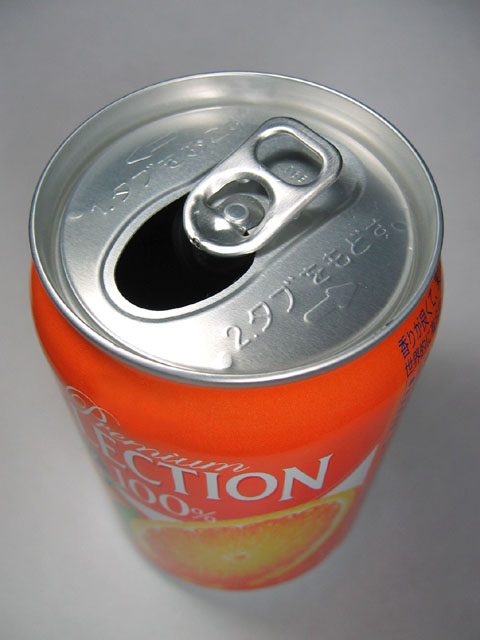
On this, Mr. Vichan Tangkengsirisin, President Director of Dow Indonesia, a member of Indonesia Partnership on Plastic Waste Management (IP2WM) presented us with a good example how product design can make a difference. He mentioned that in the past the pull-tap of canned fizzy drinks were made to be disposed after opening, causing these small aluminium pieces to be mixed with other types of waste, making it difficult to separate and recycle. There came a time when fizzy drink companies decided to make the pull-tap became ‘stay-tab’, reducing the chance of small recyclable aluminium mixing with other litters.

old-style pull tab
photo courtesy: www.wolfstad.com
a modern ‘stay-on’ tab
Photo courtesy: www.wikipedia.org


With circular economy concept in mind, companies need to rethink their materials. Mr.Vichan stated that the evolution of packaging has resulted in food stays clean and fresh for longer. However, a good packaging that boasts such qualities requires an amalgam of materials. Different types of plastic are mixed together to create an even stronger package that withstands typhoons. The horror comes after packages are discarded. Each type of plastic has a different way of recycling. With super packaging it is almost impossible to recycle such packages.

But there is hope. The trend is converging towards having one type of material for packaging while delivering all the qualities. Some have even been used commercially.

The above examples constitute only one part of the circular economy, that is from the production side. Retail is important here. Manufactured products become consumer goods sold in retailers across the globe. It is imperative for brand owners to pitch their goods to customers well in order for the products which have been designed with recyclability in mind sell.

It then goes on to consumers and waste collection and segregation and back to manufacture which involves redesigning the products and packages again. I wish to save these for later. What I have written is basically what I picked up at the symposium last week on how the concept of circular economy plays a role in waste management that goes a little bit beyond the conventional idea of recycling. I hope you have had a good read. Till next time.

Read to Write

I have been travelling and can’t help but feel, after a long day, that I need to get sufficient sleep. However, I intend to honour my commitment to write at least a post a week to be publicised every Monday.

Today’s topic is on writing. I want to talk about how I develop my writing style. The short answer is through reading (a lot). A more elaborated one suggests several things that I usually look for when I read.

First of all, I look for a writing style that I like. Sounds simple. Yes, it is that simple. I simply just read to find an author whose writing resonates well with my character, personality, and experience. There are times when I just stand in front of bookshelves in a local Kinokuniya, undecided which one(s) to go for on the same topic. Eventually, I tend to opt for books that do not spray sophisticated words and terms around. But this does not mean that I prefer not to use them at all. In fact, I do believe that such words enrich our languages and improve our ability to express certain concepts and thoughts but they have their places. Spraying our writing with superfluous words and all the niceties, especially in non-fiction books, is actually defeating the purpose of writing, that is getting the message across to the intended audience.

Second, I look for the narration sequence. This is especially beneficial if you are writing a novel. Many authors write in chronological order, the order in which things happen. Many prefer switching the time back and forth between the past and the present. In Cloud Atlas, a book I am reading now, there are about six different stories set in different times yet all are connected through certain links found in the main characters. It goes from past to present to future then back from future, present and the past to close all the stories. I haven’t reached the end yet, but this is a new technique that is doing its tricks.

Third, I enjoy learning how different authors use syntaxes as well as sets of vocabulary. The way sentences are formed define the tone of that piece of writing. This is where creativity flourishes. And for me, Murakami (and his translators), has been excellent in empowering the syntaxes in his books to have an immense impact on the readers. Syntaxes in Murakami‘s books are very simple. But he (and his translators) chooses his words and their places in the sentences meticulously. Each of his work I read has never failed me in this sense.

So these are the elements I usually look for, consciously or subconsciously, when I read a book. It does help when I write. Whenever I read more, I tend to be able to write more, with ease and with more vocabulary at my disposal. In effect, I read to write. In the first few years of actively writing (after I finished high school), I tended to try to imitate a Thai writer but after a while, I think I have developed my own style of writing. Though I don’t know whether any of my friends / readers have noticed…

17.02.2020

Environmentally Fit for Learning

I came across an article on the possible impact of a school’s design on children’s education in the Monocle Forecast 2020 written by Annabelle Chapman. Most of us would think of schools as a place of uniformity. In the East especially, we can expect state schools having similar structure, grand old buildings with corridors and rectangular classrooms each featuring small desks facing a dust-full blackboard (nowadays these desks may be facing a stained whiteboard that has seen better days). The walls are sometimes filled with students’ projects that are somewhat pre-determined, pre-arranged and pre-graded.

Devoting a lot of efforts to designing a school is rare. We generally agree that kids should have good learning materials and good teachers. But we tend not to think too much when it comes to the building design. Some may even say that kids come and go and it’s probably not worth putting a lot of money and efforts in designing state-of-the-art buildings for kids who spend a few hours a day interacting with friends and teachers. And they will soon graduate.

Yes, but the time they spend at school is also their formative years. “The surrounding shapes, colours, and texture can help pupils feel at ease or inspire them to be creative”, according to the article. On this basis, several schools in Switzerland have started considering school design as a major factor towards achieving good education. A primary school in Zofingen puts colourful step-like sculptures in a drab hall. According to designers, “bright colours, engaging textures and flexible spaces support playfulness and creativity”. In terms of materials, warm and natural ones help students and teachers feel calm and focused.

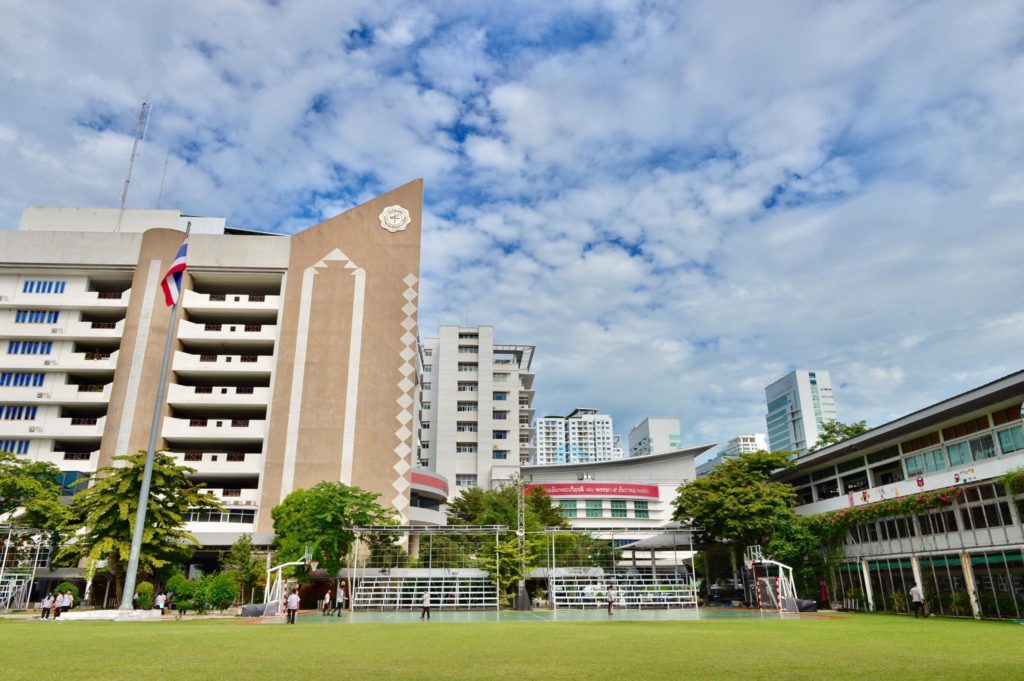
I can personally attest to the idea that good school design (and physical structure) stimulates learning experience of students. I was lucky that my school (a lab school in a university) had thought things through with most of the facilities; a curved dust-free blackboard reduces sun-glare, allowing us at the back to see the writings on the blackboard; a sound system in each classroom which only required a microphone rather than a bulky hand-held speakers most teachers at the time had to carry around; classroom windows overlooking a green neighbourhood and some nicely-built skyscrapers; and fully ventilated open-air hall that never needs air-conditioning, to name but a few. These in their entirety did foster something within me. A concept, perhaps, to think things through, to look at the big picture, and to see how things are connected.

Another important thing I got from my school was that kids were entitled to the same standard of facilities as adults. Rather than treating us as a different human class. My school built modern toilets for students. We had lifts (and later, an escalator), air-conditioning system, and food of superb quality. Things always worked and predictable. While these may sound rather materialistic, the underlining idea is that we were treated not as students but as adults living in the same community. This, along with the smooth running of the school’s physical structure complemented by several thoughtful designs had made us worry one thing less, stimulated our learning experience and contributed, unconsciously perhaps, to some of our beliefs and principles.

My alma mater
Photo Credit: https://www.alleduguide.com/schoolskindergartens/curriculum-of-psm/